What comes out of the egg?
Level B folders · WIDA Grade 1 listening. The correct answer, and the reasoning behind it.
Middle folders, aimed at levels 2 to 4: longer talks and conversations with more classroom and content vocabulary.
Look at the picture. Press Play and listen to Ms. Rogers. Then answer the questions.
Science: How a Frog Grows
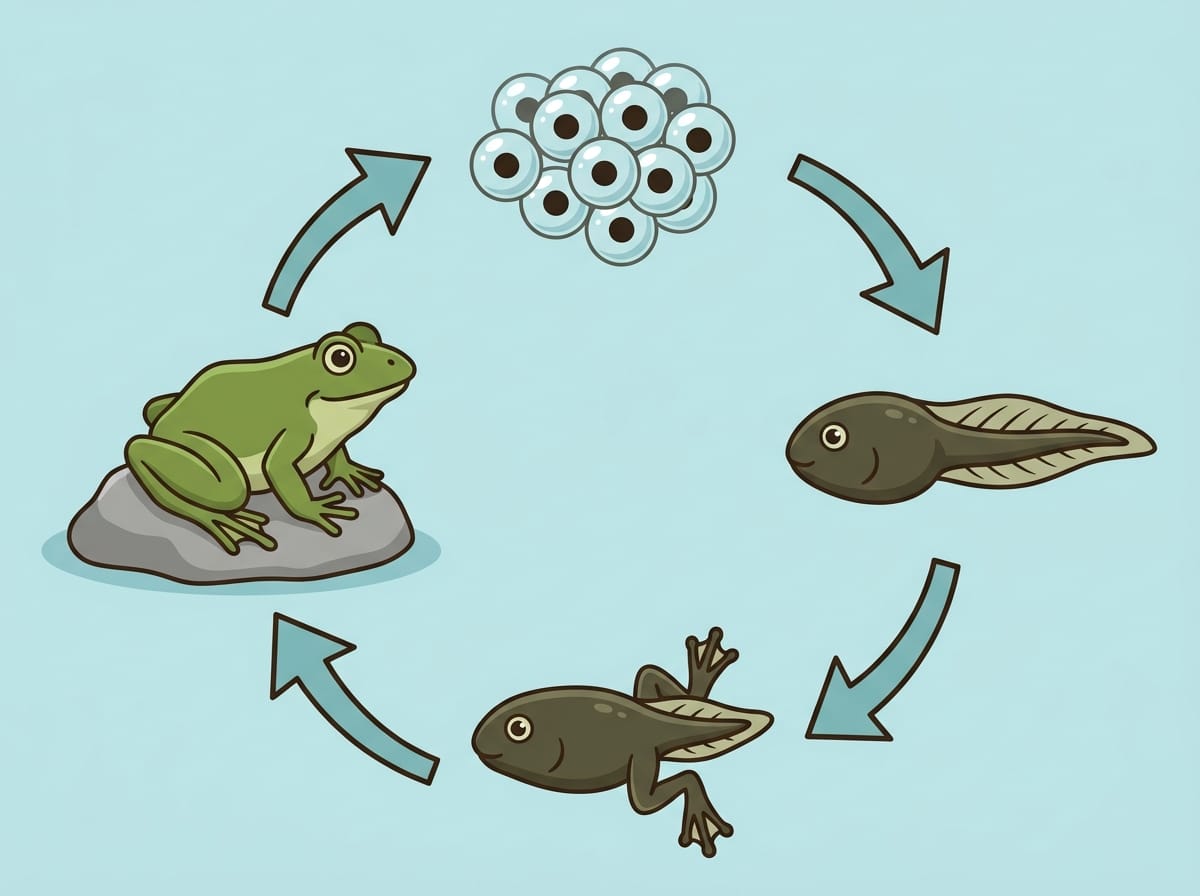
Press play to listen. You can pause, rewind, and replay as often as you like.
Show transcript
Ms. Rogers: A frog starts as a tiny egg. The eggs float in the pond.
Ms. Rogers: A tadpole comes out of the egg. A tadpole has a long tail. It swims like a fish.
Ms. Rogers: Next, the tadpole grows legs. First it grows back legs. Then it grows front legs.
Ms. Rogers: At last, the tail is gone. Now it is a frog. The frog can hop out of the water.
The question
Choose the best answer.
What comes out of the egg?
- A frog
- A tadpoleCorrect answer
- A little fish
- A turtle
Why “A tadpole” is correct
This is the order of a life cycle, which first graders learn in science. The egg does not hatch into a frog; it hatches into a tadpole. A child who knows frogs come from eggs but missed the middle step will choose "a frog".
Why the other answers are wrong
- A frog — A frog is the last stage. The egg hatches into a tadpole first.
- A little fish — Ms. Rogers says the tadpole swims like a fish, but it is not a fish.
- A turtle — Turtles also live in ponds, but they are not in this talk.
Practice more of this
More listening practice for Grade 1, or see the WIDA practice test for 1st grade.
Unofficial practice. This site is not affiliated with, endorsed by, or connected to WIDA, the Wisconsin Center for Education Research, or the Board of Regents of the University of Wisconsin System. WIDA and WIDA ACCESS are trademarks of the Board of Regents of the University of Wisconsin System. Every question here is original practice material written to match the published test design.