Why do the children put on a smock?
Level A folders · WIDA Grade 1 listening. The correct answer, and the reasoning behind it.
Easier folders, aimed at proficiency levels 1 to 3: short, everyday language with pictures and simple questions.
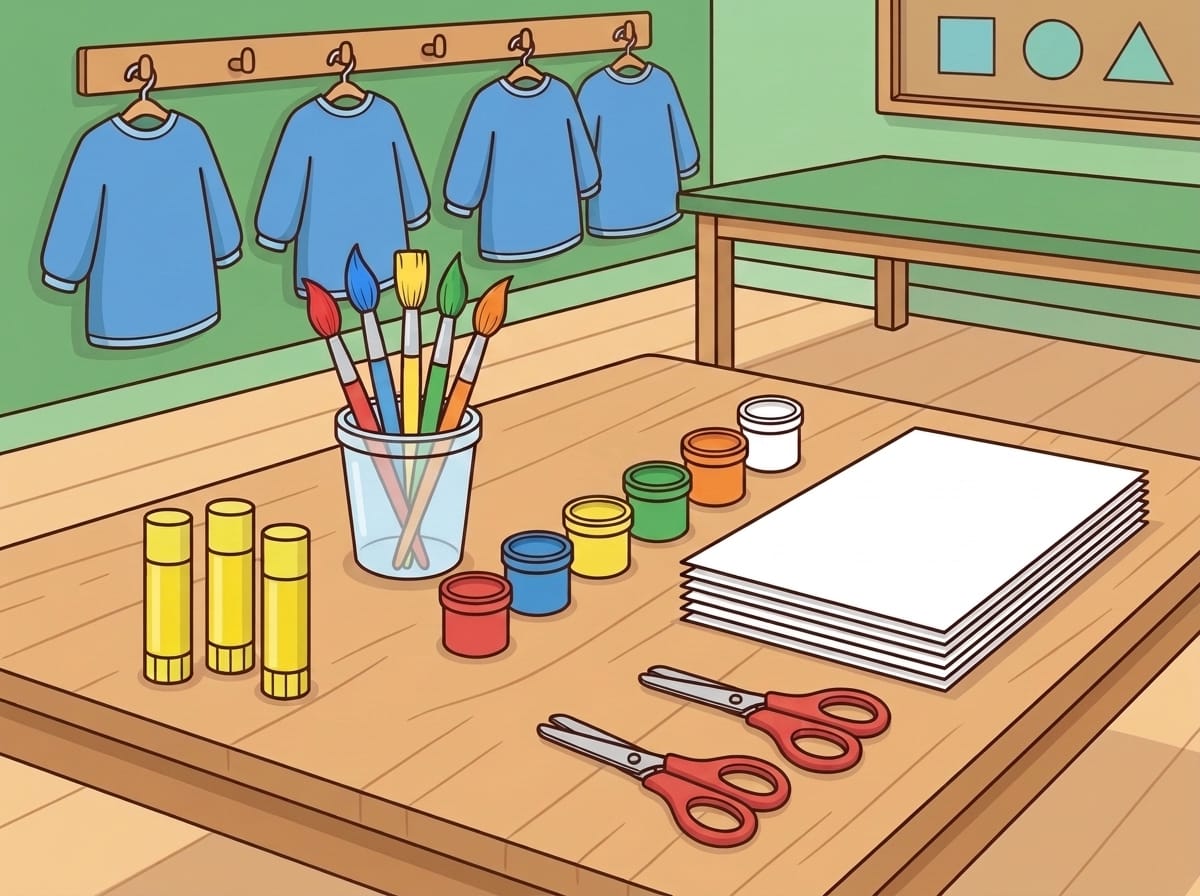
Look at the picture. Press Play and listen to Ms. Rogers. Then answer the questions.
Social and Instructional: Art Time
Press play to listen. You can pause, rewind, and replay as often as you like.
Show transcript
Ms. Rogers: Good morning, class. It is art time.
Ms. Rogers: First, get a paintbrush from the cup.
Ms. Rogers: Next, put on your smock. A smock keeps your shirt clean.
Ms. Rogers: Then sit at the green table. Today we will paint fish.
The question
Choose the best answer.
Why do the children put on a smock?
- To keep shirts cleanCorrect answer
- To stay warm at the table
- To get ready for lunch
Why “To keep shirts clean” is correct
Ms. Rogers gives the reason in the same breath as the direction: "A smock keeps your shirt clean." A child who does not know the word "smock" can still answer by listening for what it does. That is a useful habit to point out: an unknown word is often explained right after it.
Why the other answers are wrong
- To stay warm at the table — A smock can look like a jacket, but nothing is said about being warm.
- To get ready for lunch — Lunch is not mentioned. The class is getting ready to paint.
Practice more of this
More listening practice for Grade 1, or see the WIDA practice test for 1st grade.
Unofficial practice. This site is not affiliated with, endorsed by, or connected to WIDA, the Wisconsin Center for Education Research, or the Board of Regents of the University of Wisconsin System. WIDA and WIDA ACCESS are trademarks of the Board of Regents of the University of Wisconsin System. Every question here is original practice material written to match the published test design.