WIDA writing practice for kindergarten
Printable version. Original practice written to match the published WIDA format, not questions from the official test.
Writing prompts
On the real test these are scored by a trained person against a rubric. The rubric and a sample response follow each prompt.
Prompt 1: Storybook writing
Suggested time: about 5 minutes
Read the page aloud to your child, then look at the picture together.
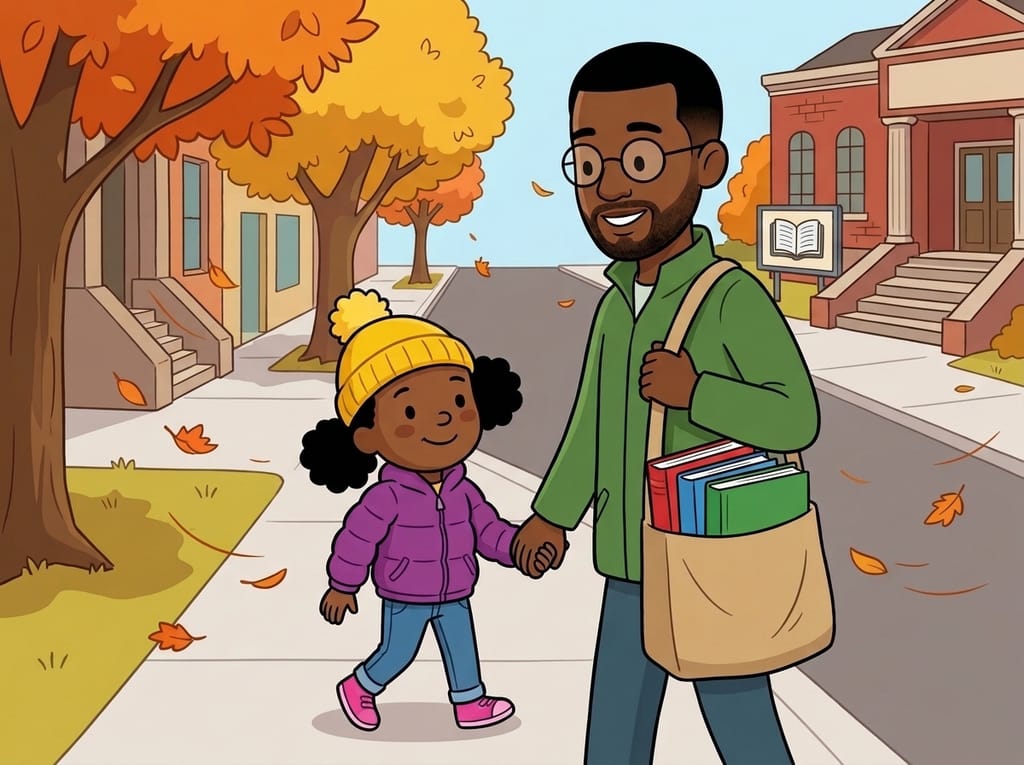
Zoe's Yellow Hat: page 1
Picture description
This is Zoe. Zoe has a new yellow hat. Zoe and Dad walk to the library. Dad has three books in his bag.
Picture: Zoe, a small girl in a purple coat and a bright yellow knit hat with a pom-pom, holds her dad's hand on a city sidewalk on a windy autumn day. Dad carries a cloth bag with three books sticking out: a red one, a blue one and a green one. At the end of the street is a brick library with wide steps.
Give your child a sheet of paper, a pencil and crayons. Read the task aloud. Let your child draw first, then ask them to write a word next to the drawing. You can say the word as often as they ask, but don't spell it or write it for them.
Draw Zoe's new hat. Then write a word that tells what it is.
Scoring rubric
| Level | What it looks like |
|---|---|
| 4: Confident |
|
| 3: Developing |
|
| 2: Beginning |
|
| 1: Starting |
|
A strong sample response
Your child draws a yellow hat with a round ball on top and colors it yellow. Next to it they write: hat. Under that, after a pause, they add: yelo.
This shows level 4, Confident: the label "hat" is spelled correctly, and the child adds a second word, "yelo" for yellow, without being asked. Invented spelling like "yelo" shows the child is hearing the sounds and writing letters for them, which is exactly what this task looks for.
What to look for
- This is a drawing-and-labeling task, one of the Kindergarten writing types. The drawing matters: it shows your child understood the story, so give it a minute before asking for words.
- Let your child stretch the word out loud ("h-a-t") before writing. Don't correct the spelling or write over it; a label like "ht" shows two sounds were heard.
- The real Kindergarten test has its own writing rubric, scored by the test administrator. The levels here are a simplified practice guide, not a score.
Prompt 2: Storybook writing
Suggested time: about 5 minutes
Read the page aloud to your child, then look at the picture together.
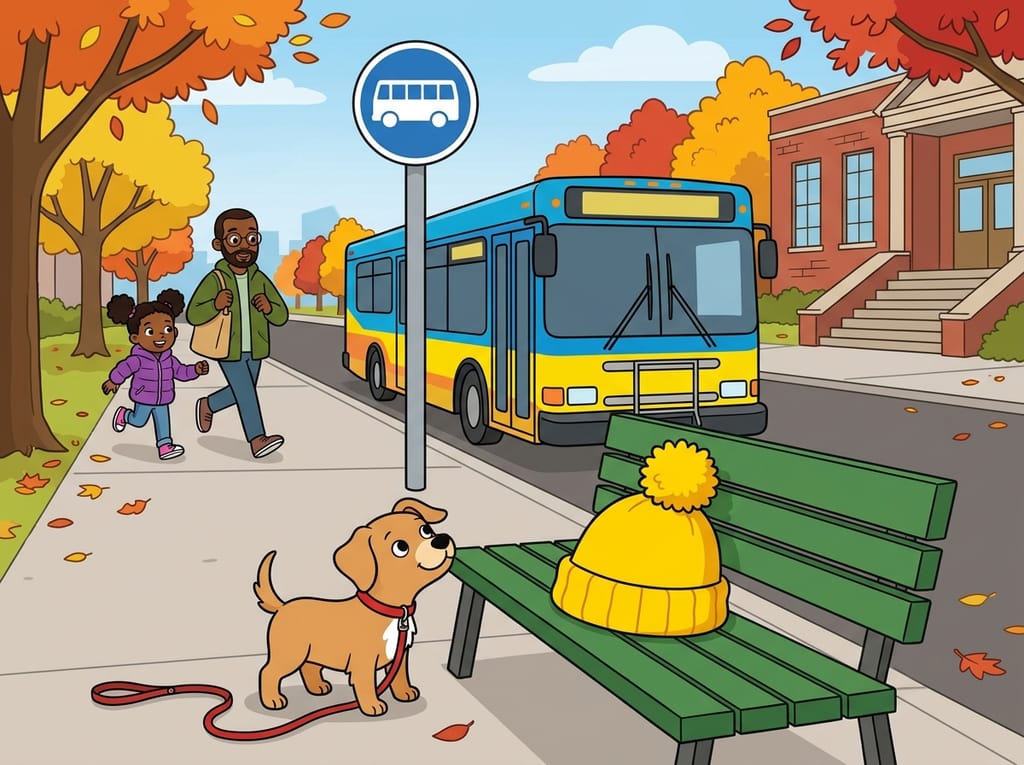
Zoe's Yellow Hat: page 3
Picture description
The hat lands on a bench at the bus stop. A little brown dog sees the hat.
Picture: a bus stop with a green bench and a pole with a bus sign. Zoe's yellow hat sits on the bench. A small light-brown dog with floppy ears and a red collar stands next to the bench, looking at the hat. A big city bus is pulling up in the background.
Give your child a sheet of paper with three lines on it. Point to one thing in the picture at a time, say its name slowly, and let your child write it on one line before you move to the next.
Point to the dog and say: "Write dog." Then point to the hat: "Write hat." Then point to the bus: "Write bus."
Scoring rubric
| Level | What it looks like |
|---|---|
| 4: Confident |
|
| 3: Developing |
|
| 2: Beginning |
|
| 1: Starting |
|
A strong sample response
Line 1: dog
Line 2: hat
Line 3: bs
Then, pointing at the bench, your child says "I can do that one too" and writes: bech
This shows level 4, Confident: two words are spelled correctly, "bs" has the first and last sounds of bus, and the child adds a fourth word, "bech" for bench, without help. All three words chosen have short, regular spellings, so most kindergartners can hear every sound.
What to look for
- This is a letters-and-words task. Say each word slowly and let your child say it after you before writing; the sounds have to be heard before they can be written.
- A first letter alone (d, h, b) is a real start and shows the child links sounds and letters. A reversed letter such as a backwards d is normal at five and not what this task is about.
- The real Kindergarten test has its own writing rubric, scored by the test administrator. The levels here are a simplified practice guide, not a score.
Prompt 3: Storybook writing
Suggested time: about 6 minutes
Read the page aloud to your child, then look at the picture together.
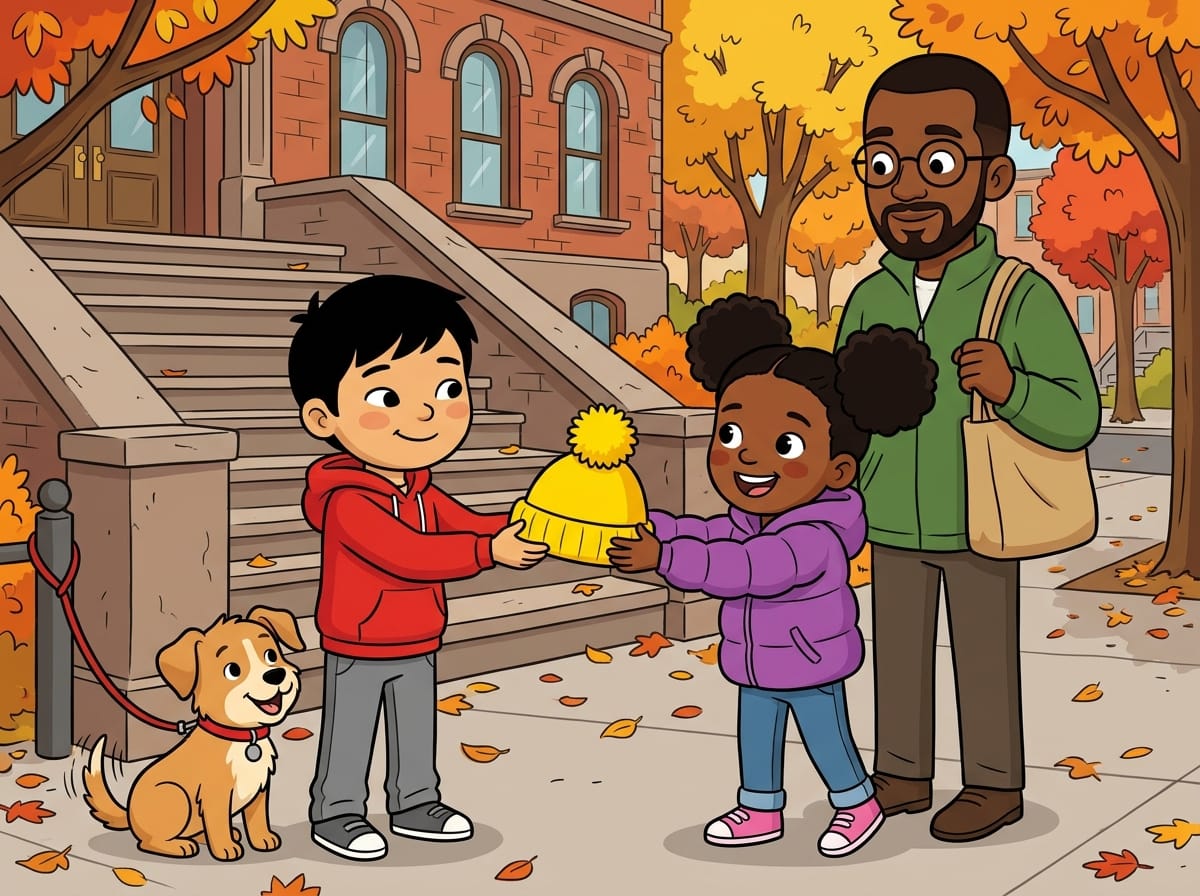
Zoe's Yellow Hat: page 6
Picture description
Leo takes the hat. He gives it to Zoe. "Here is your hat," says Leo. "Thank you!" says Zoe.
Picture: Leo, in his red sweatshirt, holds out the yellow hat and Zoe takes it with one hand. Both children are smiling. The little brown dog sits near Leo, its leash tied to a post, wagging its tail. Dad stands behind Zoe, smiling.
Read the task aloud. Ask your child to tell you their sentence out loud first, then write it. If they are stuck, you can say the start, "Leo gave...", but don't write it for them.
Write a sentence about what Leo did.
Scoring rubric
| Level | What it looks like |
|---|---|
| 4: Confident |
|
| 3: Developing |
|
| 2: Beginning |
|
| 1: Starting |
|
A strong sample response
Your child says the sentence aloud first: "Leo gave Zoe the hat." Then writes:
Leo gav Zoe the hat. She is hape.
This shows level 4, Confident: a complete sentence about what Leo did, using story words (Leo, Zoe, hat), and a second sentence adding how Zoe feels. "Gav" and "hape" are invented spellings a reader can work out, and the child used a capital letter and a period.
What to look for
- This is the sentence task, the hardest of the Kindergarten writing types. Saying the sentence aloud first helps your child hold it in mind while writing it word by word.
- Look for spaces between words and letters for most of the sounds. "Leo gv hat" still shows a sentence idea; it is earlier on the same path.
- The real Kindergarten test has its own writing rubric, scored by the test administrator. The levels here are a simplified practice guide, not a score.
Unofficial practice. This site is not affiliated with, endorsed by, or connected to WIDA, the Wisconsin Center for Education Research, or the Board of Regents of the University of Wisconsin System. WIDA and WIDA ACCESS are trademarks of the Board of Regents of the University of Wisconsin System. Every question here is original practice material written to match the published test design.