WIDA reading practice questions for kindergarten
Passages, charts and pictures with questions in groups of three, from social and classroom language to language arts, math, science and social studies.
Teaching this in class? It is all free online, and the Kindergarten printable pack ($8.99) has a booklet for every student, the answer key, rubrics and audio.
These 10 questions are grouped by task type, one group at a time. Answer a question to see whether it was right and why. Nothing is timed and nothing is recorded. Printable version with the answer key.
Set 1 of 1. 0 of 10 questions answered.
Storybook reading
Early reading from the storybook: book handling, letters, sounds, words and short sentences.
Sit with your child and look at the three books together. On the real test the test administrator hands the child the storybook and asks about it; here the picture stands in for the book. Don't read the description below aloud: it gives the answer and is there for you and for screen readers.
Zoe's Yellow Hat: holding the book
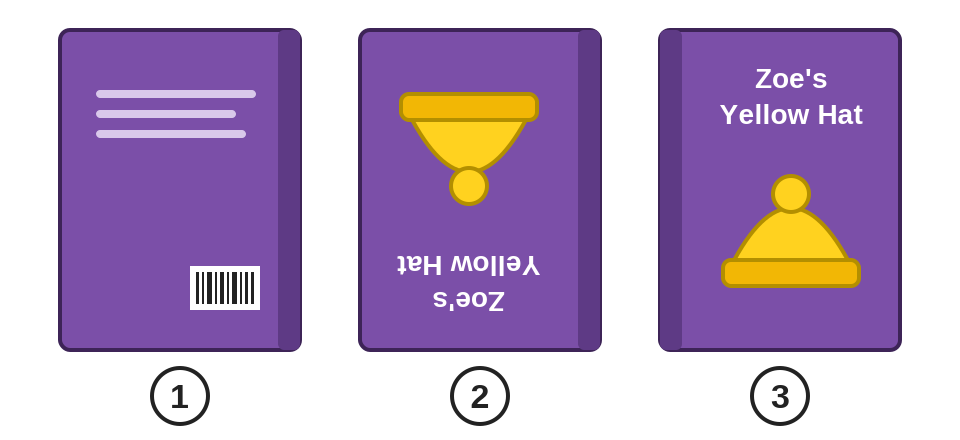
Read image description
Three copies of the same storybook are shown in a row, each with a big number under it.
Book 1 shows the back cover: a plain purple cover with a few small lines of print and a small barcode in the corner, and no title.
Book 2 shows the front cover upside down: the title and the yellow hat picture are both upside down.
Book 3 shows the front cover the right way up: the title "Zoe's Yellow Hat" across the top and a big yellow hat with a pom-pom underneath.
Question 1 of 10
Read the question aloud. Your child points to one of the three books.
Which one shows the front of the book, the right way up?
Look at the page together. Don't read the sentence aloud yet. The description below is for you and for screen readers.
Zoe's Yellow Hat: a page with words
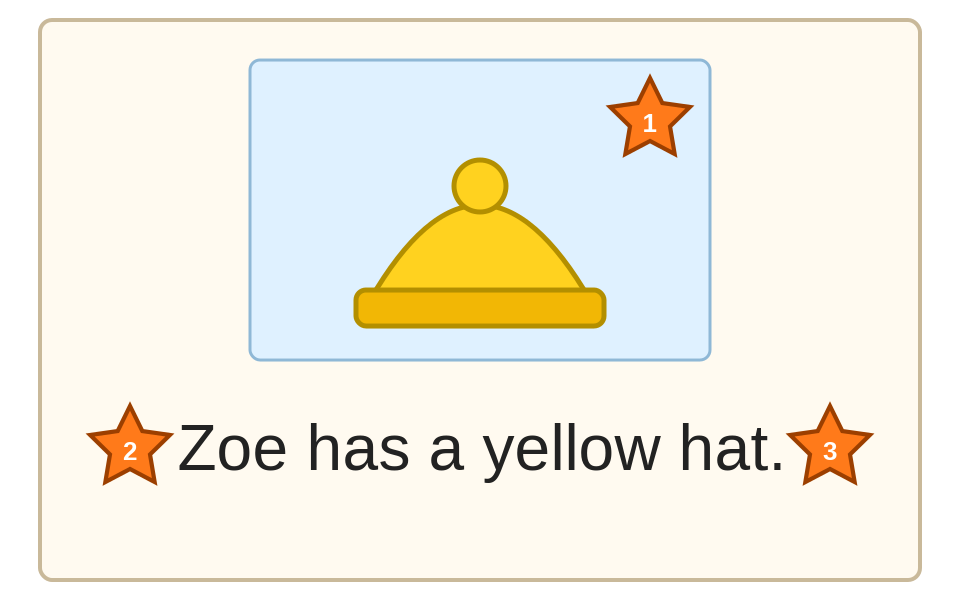
Read image description
A storybook page with a picture of a yellow hat at the top and one line of large print underneath: "Zoe has a yellow hat."
Three numbered stars are on the page. Star 1 is on the picture of the hat. Star 2 is just to the left of the first word, "Zoe". Star 3 is just to the right of the last word, "hat."
Question 2 of 10
Read the question aloud. Your child points to one of the three stars.
Where do you start reading the words on this page?
Question 3 of 10
Now read the sentence aloud, pointing to each word. Then read the question and the three answers aloud. Your child can count by touching each word.
How many words are in this sentence?
Point at the word below and read it aloud slowly. Then read the question and all three answers aloud.
Question 4 of 10
Read this question and the three answers aloud to your child.
Which letter comes first in this word?
Point at the word below and say it slowly, stretching the first sound. Then read the question and all three answers aloud.
Question 5 of 10
Say the word slowly again. Then read this question and the three answers aloud, saying each sound clearly.
Which sound does this word start with?
Point at the word below but do not say it. This one checks whether your child knows a very common word by sight. Read the question and the three answers aloud.
Question 6 of 10
Read this question and the three answers aloud. Your child looks at the word on the card and chooses.
This is a word we see in lots of books. Which word is it?
Point at the word below but do not say it. Read the question and the three answers aloud.
Question 7 of 10
Read this question and the three answers aloud. Your child looks at the word on the card and chooses.
Which word is this?
Ask your child to read the sentence. Point under each word as they go. Don't read it for them first; if they get stuck on a word, say its first sound and wait.
Zoe's Yellow Hat: read a sentence
The dog has the hat.
Question 8 of 10
After your child reads the sentence, say: "Which picture shows the sentence?" Don't read the picture labels aloud; let your child look at the pictures.
Which picture shows the sentence?
Ask your child to read the sentence. Point under each word as they go. Don't read it for them first; if they get stuck on a word, say its first sound and wait.
Zoe's Yellow Hat: read another sentence
The hat is up.
Question 9 of 10
After your child reads the sentence, say: "Which picture shows the sentence?" Don't read the picture labels aloud; let your child look at the pictures.
Which picture shows the sentence?
Read this page aloud slowly, sliding your finger under each word. Your child can read along with you. Then read the question and the three answers aloud.
Zoe's Yellow Hat: page 7
Zoe and Dad go into the library. Zoe finds a book about a dog. The dog looks just like Biscuit!
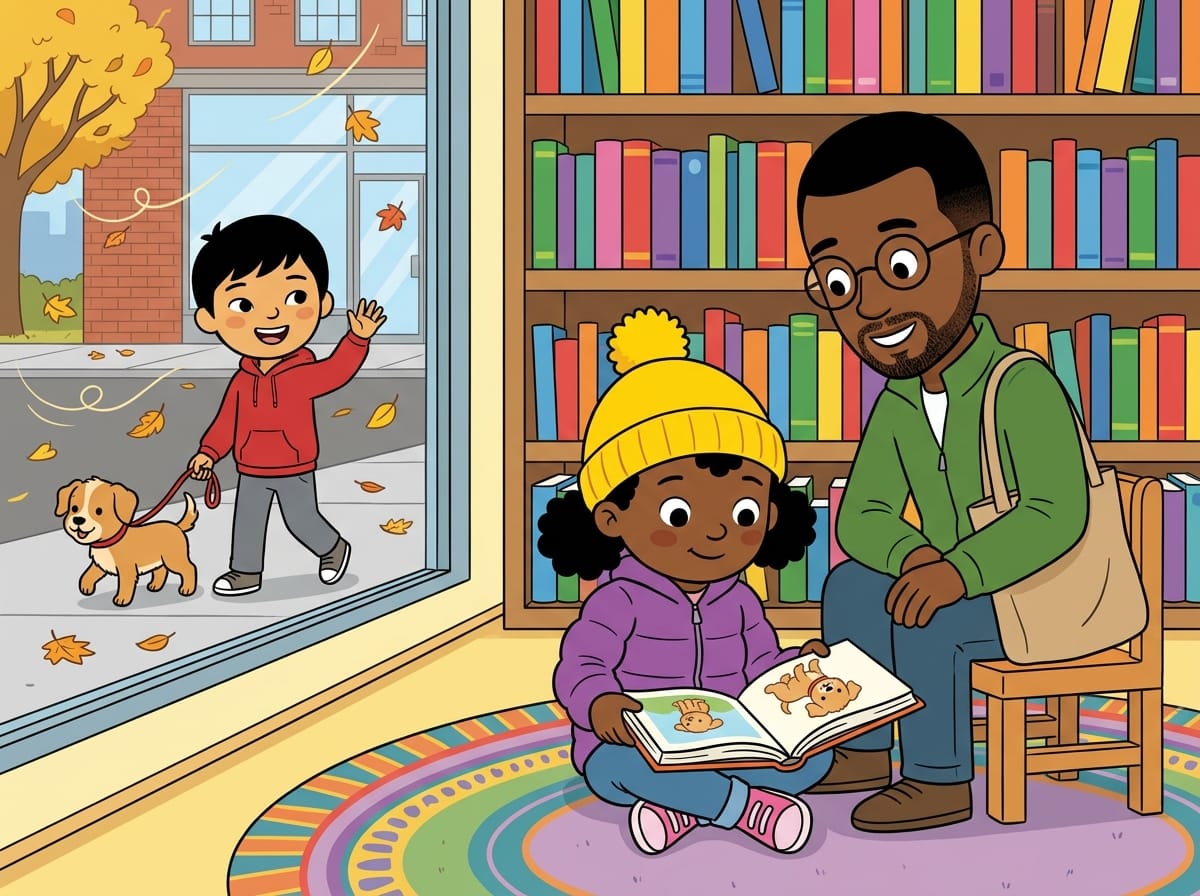
Read panel descriptions
Picture: inside the library, Zoe sits on a round rug with her yellow hat on, holding open a picture book that shows a small brown dog. Dad sits on a low chair next to her. Shelves of books fill the wall. Through the window, Leo and the little brown dog wave from the sidewalk.
Question 10 of 10
Read the question and the three answers aloud to your child.
What does Zoe find in the library?
10 questions in this set are still unanswered. You can move on without answering them.
Ready for the whole thing? Take the reading practice test for Kindergarten.
Answer key: every answer, explained
The correct answer to every question above, with why it is right and why each other choice is wrong. Open a question to see its answer.
Storybook reading
1. Which one shows the front of the book, the right way up?
From “Zoe's Yellow Hat: holding the book”
- book 1
- book 2
- book 3Correct answer
Why “book 3” is correct
Knowing the front of a book, and which way up it goes, is the first thing a kindergarten reading test checks, and it is called print awareness. Book 3 has the title and picture facing the right way. With a real book at home, hand it to your child upside down or back first and see whether they turn it around before opening it.
Why the other answers are wrong
- book 1 — This is the back cover, with no title or big picture. A child who picks it may not yet know that the front is where the title is.
- book 2 — This is the front, but upside down. Choosing it means your child spotted the cover picture but did not check which way up the words go, so ask "can you read it like this?"
2. Where do you start reading the words on this page?
From “Zoe's Yellow Hat: a page with words”
- star 1
- star 2Correct answer
- star 3
Why “star 2” is correct
This checks that your child knows we read the words, not the picture, and that English starts on the left. Star 2 sits right before the first word, "Zoe". If your child's home language is read right to left, choosing star 3 is an understandable habit, not a mistake in thinking.
Why the other answers are wrong
- star 1 — Star 1 is on the picture. Young children often "read" the picture first, so explain that the story's words are in the line of print.
- star 3 — Star 3 is at the end of the line. A child who picks it knows to look at the words but is starting from the right; run your finger left to right as you read the sentence.
3. How many words are in this sentence?
From “Zoe's Yellow Hat: a page with words”
- 5 wordsCorrect answer
- 3 words
- 8 words
Why “5 words” is correct
Counting words checks the idea that a word is a group of letters with a space on each side. "Zoe has a yellow hat" has five words. Watch whether your child counts the short word "a"; it is the one most often skipped.
Why the other answers are wrong
- 3 words — Three is what a child often gets by counting only the words they can say loudly, such as Zoe, yellow and hat. Touch each word, including "a", and count again.
- 8 words — Eight is more words than the page has. A child who picks it may be counting letters or word parts instead of whole words; touch each word once and count slowly.
4. Which letter comes first in this word?
- t
- hCorrect answer
- a
Why “h” is correct
This asks for a letter name and checks left-to-right order in a single word. The word is "hat" and the first letter on the left is h. Slide your finger under the word and stop on the first letter if your child is unsure.
Why the other answers are wrong
- t — The letter t is at the end of "hat". A child who picks it may be looking at the right-hand side first.
- a — The letter a is in the middle. Children often name the letter they know best rather than the one on the left.
5. Which sound does this word start with?
- the /b/ sound, like in bus
- the /g/ sound, like in goat
- the /d/ sound, like in duckCorrect answer
Why “the /d/ sound, like in duck” is correct
This is about the first sound, not the letter name, which teachers call phonemic awareness. "Dog" starts with /d/, as "duck" does. If your child says the letter name "dee" instead of the sound, that is normal at five: accept it, say the sound, and ask again.
Why the other answers are wrong
- the /b/ sound, like in bus — The /b/ sound is not in "dog" at all, but b and d look alike in print and children mix them up often. Feel the difference: lips press together for /b/, the tongue taps behind the teeth for /d/.
- the /g/ sound, like in goat — The /g/ sound is at the end of "dog". Ending sounds are often easier to hear, so say the word in slow motion, d-o-g, to show which comes first.
6. This is a word we see in lots of books. Which word is it?
- theCorrect answer
- and
- is
Why “the” is correct
"The" is the most common word in English print, and kindergartners are expected to know it by sight, without sounding it out. It appears many times in the storybook. If your child cannot say it, find "the" in a few sentences together and read it each time you reach it.
Why the other answers are wrong
- and — "And" is another very common sight word with three letters, so it is a reasonable guess. Point out that this word starts with t, not a.
- is — "Is" is a sight word too, but it has only two letters. Counting the letters on the card helps rule it out.
7. Which word is this?
- she
- seeCorrect answer
- said
Why “see” is correct
All three choices start with s, so your child has to look past the first letter to the rest of the word. "See" has a double e. This is harder than the last question and a fair stretch for a kindergartner learning English.
Why the other answers are wrong
- she — "She" also has three letters and ends in e, so it looks very close. The second letter is the clue: h in "she", e in "see".
- said — "Said" starts with s but is longer and has different letters. A child who picks it is probably going by the first letter alone.
8. Which picture shows the sentence?
From “Zoe's Yellow Hat: read a sentence”
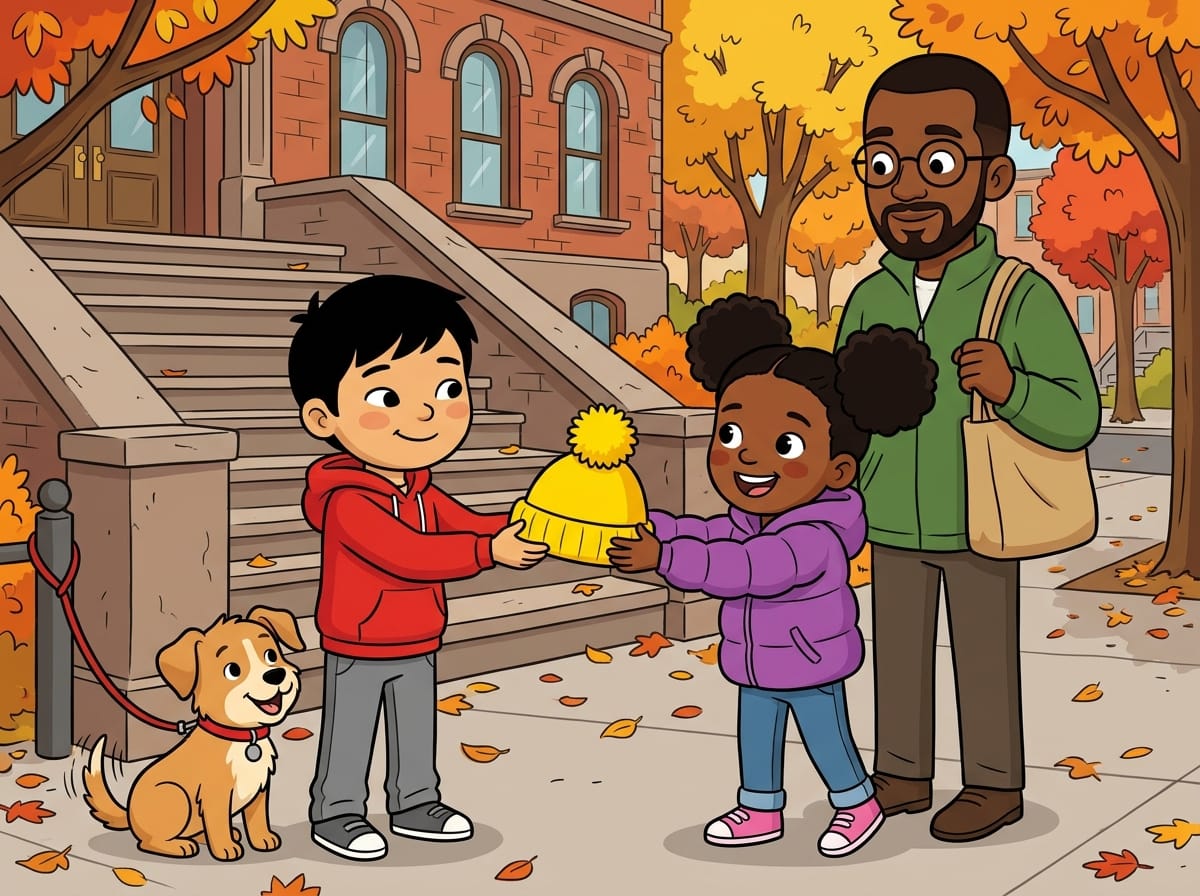 Leo handing the hat to Zoe
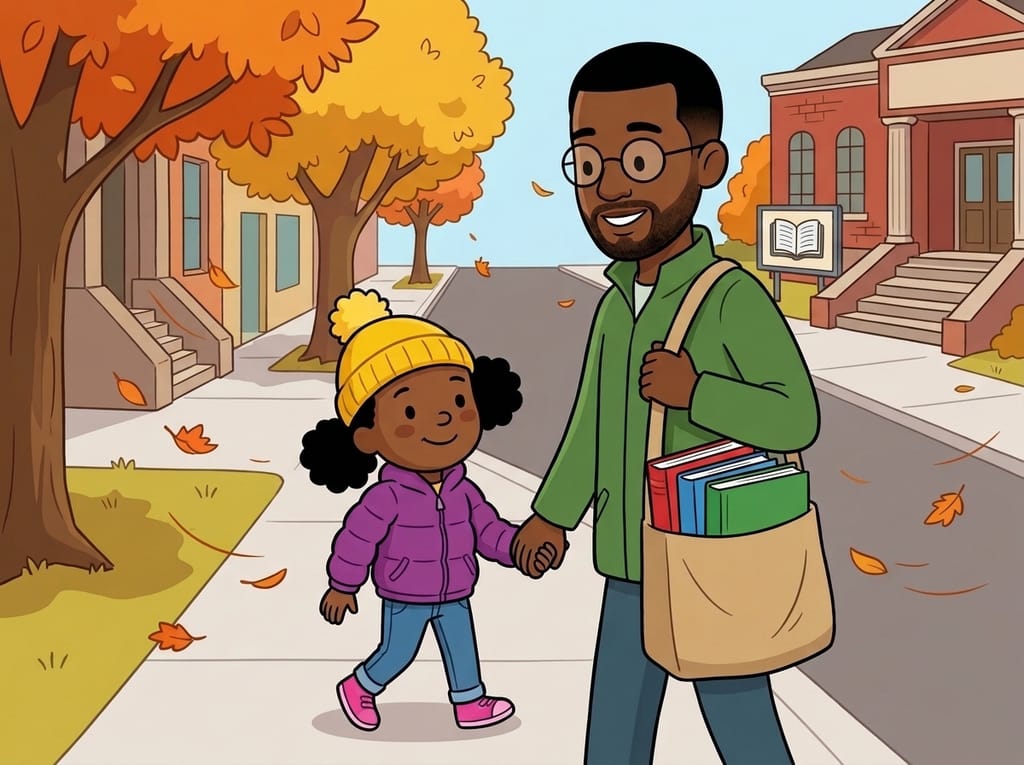 Zoe walking with Dad
- Correct answer
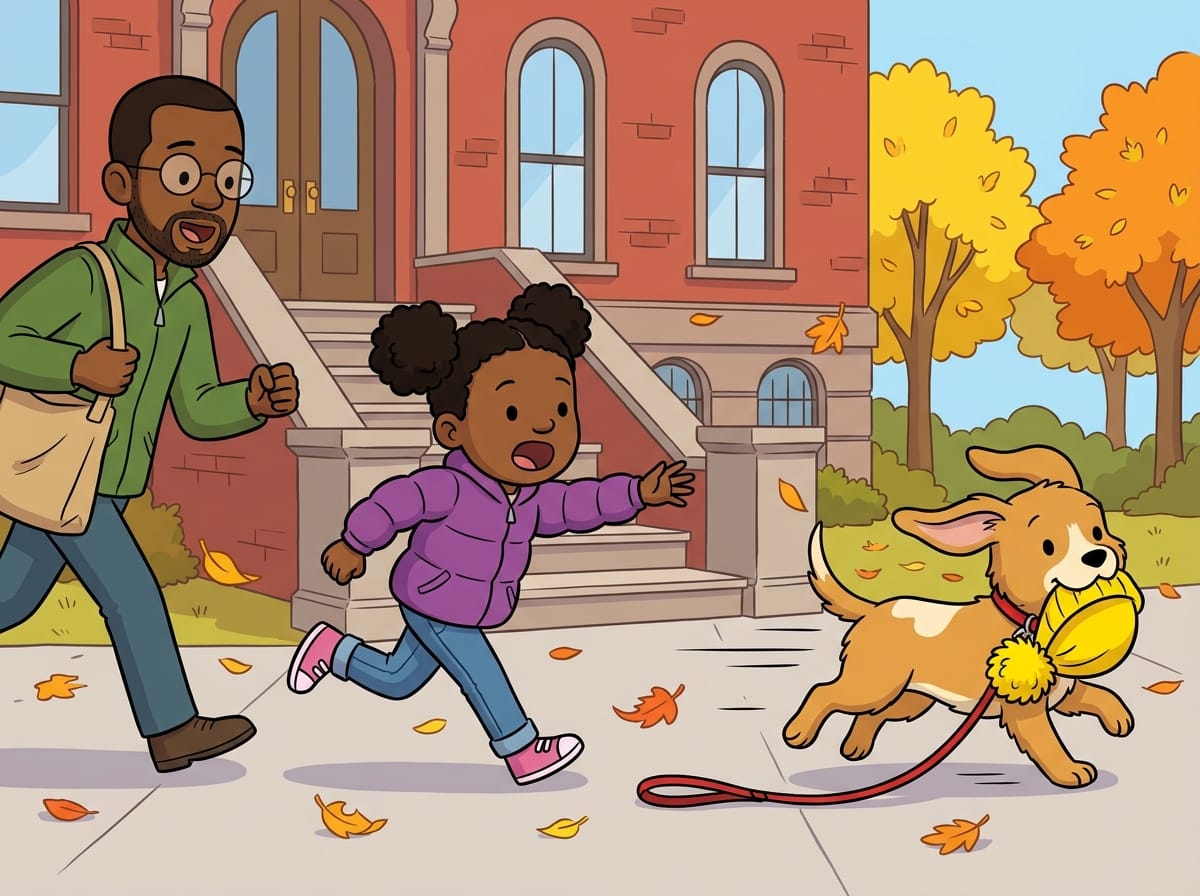 the dog running off with the hat
Why “the dog running off with the hat” is correct
Reading a short decodable sentence and matching it to a picture shows that your child is getting meaning from print, not only saying the words. "The dog has the hat" matches the picture where the hat is in the dog's mouth. "Dog", "has" and "hat" can all be sounded out; "the" is a sight word.
Why the other answers are wrong
- Leo handing the hat to Zoe — The dog is in this picture, but Leo has the hat. A child who picks it read "dog" and "hat" but not who has the hat.
- Zoe walking with Dad — Zoe has the hat here, on her head. Ask your child to point to the word that says who has the hat.
9. Which picture shows the sentence?
From “Zoe's Yellow Hat: read another sentence”
- Correct answer
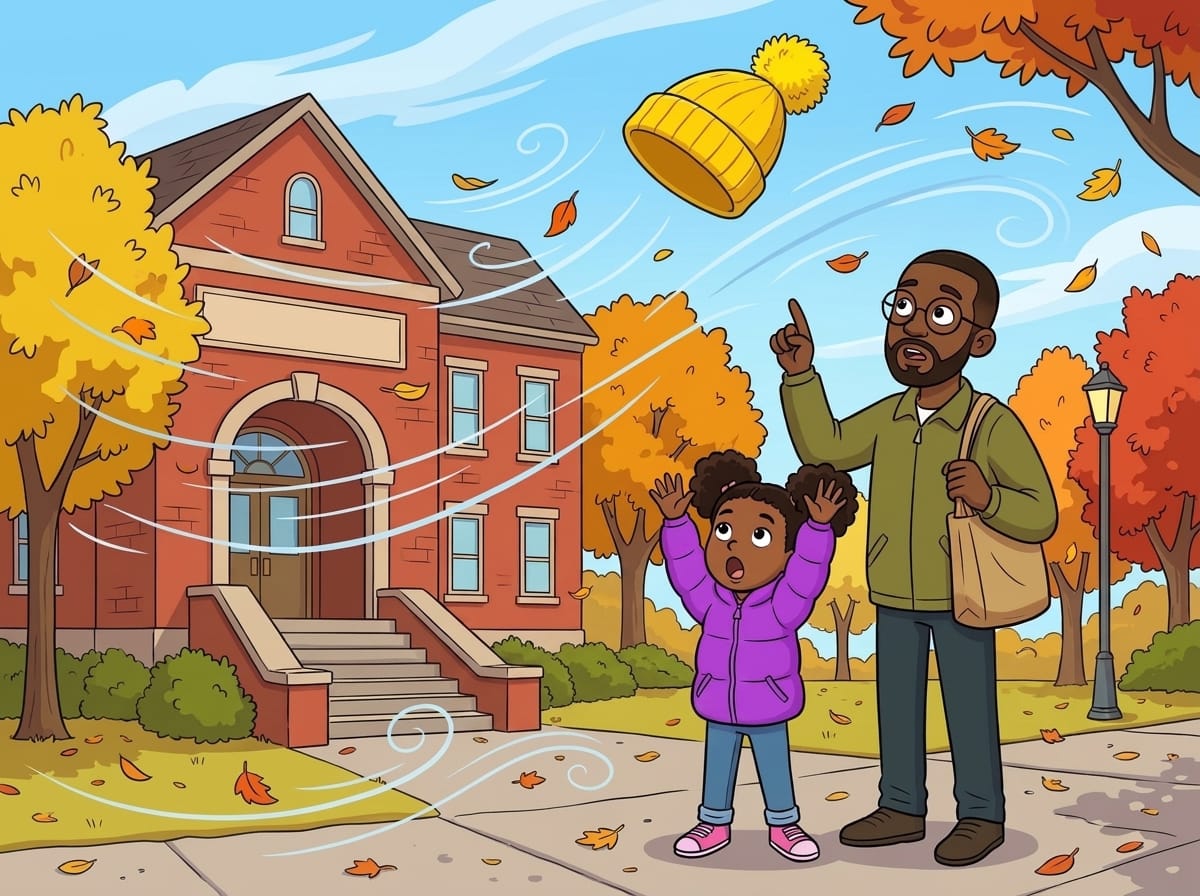 the hat high in the air
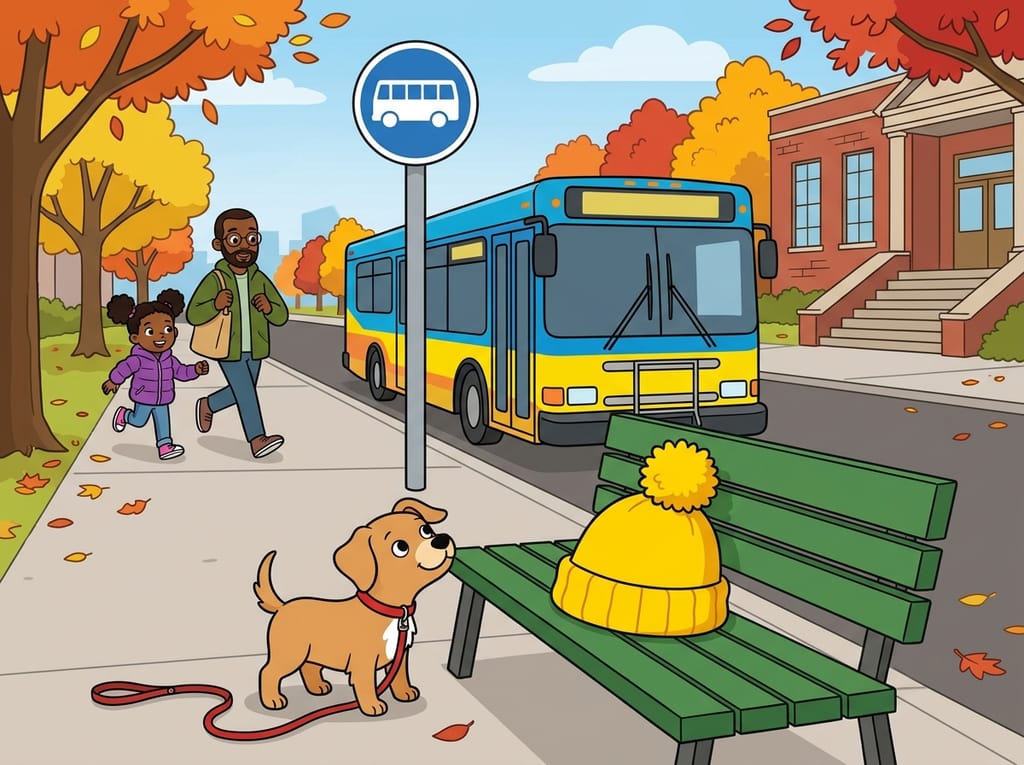 the hat on the bench
- Zoe holding the hat
Why “the hat high in the air” is correct
Every picture has the hat, so the one word that decides the answer is "up". That makes this the hardest reading question here: your child has to read every word, not just spot "hat". If they choose quickly, ask them to put a finger on the word that tells where the hat is.
Why the other answers are wrong
- the hat on the bench — The hat is on the bench here, not up. A child who picks it read "hat" and stopped; point to "up" and sound it out together.
- Zoe holding the hat — Zoe is taking the hat from Leo here. This choice usually means the last word was guessed, not read.
10. What does Zoe find in the library?
From “Zoe's Yellow Hat: page 7”
- a hat
- a dog
- a bookCorrect answer
Why “a book” is correct
This is reading along with an adult and recalling one detail, the last step of the storybook. Zoe finds a book, and the book is about a dog. If your child answers "dog", read the middle sentence again and point to the word "book".
Why the other answers are wrong
- a hat — Zoe already has her hat; she is wearing it in the picture. This is the story's main object, so it is a natural guess.
- a dog — This is the closest trap: the book is about a dog, but Zoe finds the book, not a real dog. Choosing it shows your child heard the page but missed what the dog belongs to.
More WIDA practice for kindergarten
Read next
- WIDA Listening and Reading Test: Folders, Levels and Adaptivity: On WIDA ACCESS Online, listening and reading questions come in folders: one recording or text with a small group of questions about it. The test is adaptive, so after each folder it moves the student to easier or harder material. Listening and reading are taken first, and the results decide the tier of speaking and writing. Here is how they work.
- How to Prepare for WIDA ACCESS: A Practical Plan for Parents: WIDA ACCESS measures English that grows over months and years, so there is no shortcut to a higher level. What preparation can do is make the test familiar, so your child's real English shows on the day. The best plan is the official WIDA demos, a few weeks of short practice in each domain, and plenty of talk and reading at home, in any language.
- WIDA Scale Scores: How They Relate to Proficiency Levels: Every WIDA ACCESS score report gives two numbers for each domain and composite: a scale score and a proficiency level. The proficiency level (1.0 to 6.0) is the number schools and states usually act on. The scale score is what the level is worked out from, and it is the better number for tracking growth. In 2025–26, WIDA reset the scale, so scale scores from before 2026 cannot be compared with scale scores from 2026 on.
Unofficial practice. This site is not affiliated with, endorsed by, or connected to WIDA, the Wisconsin Center for Education Research, or the Board of Regents of the University of Wisconsin System. WIDA and WIDA ACCESS are trademarks of the Board of Regents of the University of Wisconsin System. Every question here is original practice material written to match the published test design.