Reading practice test, Grades 6–8 — question 13 of 30
Read the article and the diagram. Then answer the questions.
Science: How Wetlands Clean Water
Read image description
When rain falls on a farm field or a parking lot, it does not just soak into the ground. Much of it runs across the surface, picking up soil, fertilizer and other materials along the way. This runoff can make rivers and lakes muddy and unhealthy. Wetlands, such as marshes and swamps, help solve this problem.
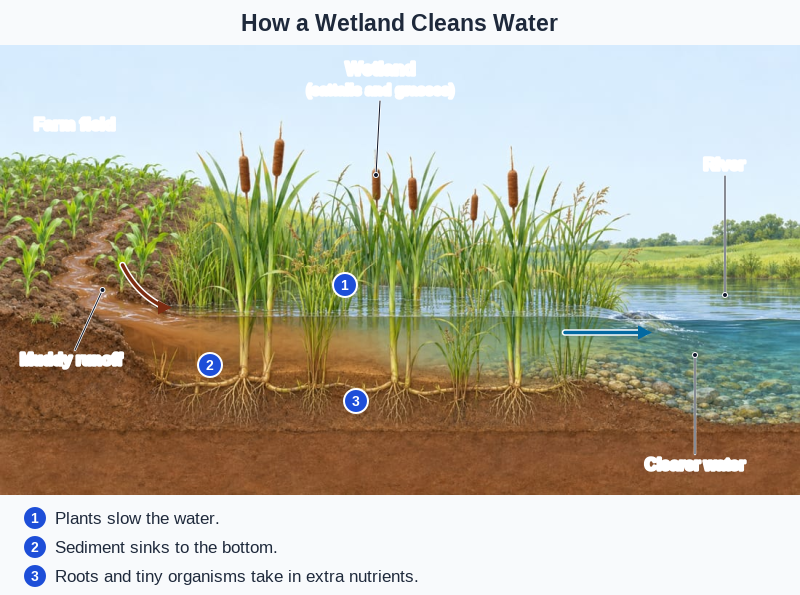
First, wetland plants slow the water down. Thick stems of cattails and grasses act like a crowded hallway: the water has to squeeze between them, so it loses speed.
Next, because the water is moving slowly, sediment can settle out. Sediment is the soil, sand and tiny pieces of rock carried by moving water. In fast water, these pieces stay mixed in. In slow water, they sink to the bottom of the wetland.
Finally, plant roots and tiny organisms called microbes take in extra nutrients, such as the nitrogen in fertilizer. A small amount of nitrogen helps living things grow, but too much can cause huge blooms of algae that use up the oxygen fish need.
By the time the water leaves the wetland, it is often much cleaner than when it arrived. For this reason, some scientists call wetlands "the kidneys of the landscape." Today, many towns protect wetlands or even build new ones to help keep their water clean.
Choose the best answer.
What is the main idea of the article?
You can move on without answering. Unanswered questions are counted as wrong.