Reading practice test, Grades 4–5 — question 26 of 30
Read the passage and look at the diagram. Then answer the questions.
Science: Energy in a Pond Food Chain
Read image description
Every living thing needs energy to grow, move, and stay alive. In a pond, energy passes from one living thing to another in a pattern called a food chain.
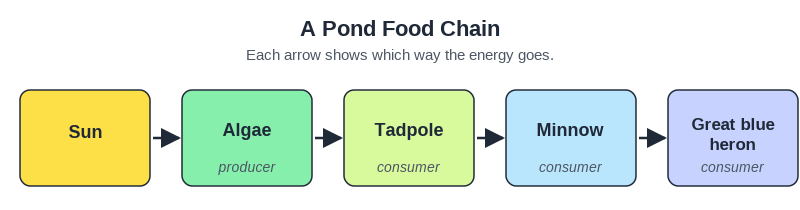
Most food chains begin with the sun. Algae, tiny plant-like living things that float in the water, use sunlight to make their own food. Because they make food, algae are called producers.
Tadpoles eat algae. Small fish called minnows eat tadpoles. A great blue heron, a tall wading bird, stands perfectly still in the shallow water and then snatches minnows with its sharp beak. Animals that get energy by eating other living things are called consumers.
In a food chain diagram, each arrow points from the living thing that is eaten to the living thing that eats it. The arrow shows which way the energy goes.
A change to one link can affect the whole chain. Suppose a chemical washes into the pond and kills most of the algae. The tadpoles would have less to eat, so fewer of them would survive. Then the minnows would go hungry, and finally the herons would have to hunt in other ponds.
The diagram shows the chain: Sun, then algae, then tadpole, then minnow, then great blue heron, with an arrow between each one.
Choose the best answer.
In the diagram, an arrow points from the minnow to the heron. What does this arrow show?
You can move on without answering. Unanswered questions are counted as wrong.