WIDA Practice
Practice TestsDomainsToolsGuidesPrintablesAbout
  • Practice Tests
  • Domains
  • Tools
  • Guides
  • Printables
  • About
Home / Practice tests / Grade 1 / Writing / Printable version

WIDA writing practice for 1st grade

Printable version. Original practice written to match the published WIDA format, not questions from the official test.

Back to the interactive version

Writing prompts

On the real test these are scored by a trained person against a rubric. The rubric and a sample response follow each prompt.

Prompt 1: Tier A tasks

Suggested time: about 10 minutes

Look at the picture. Then write.

Science: The Turtle
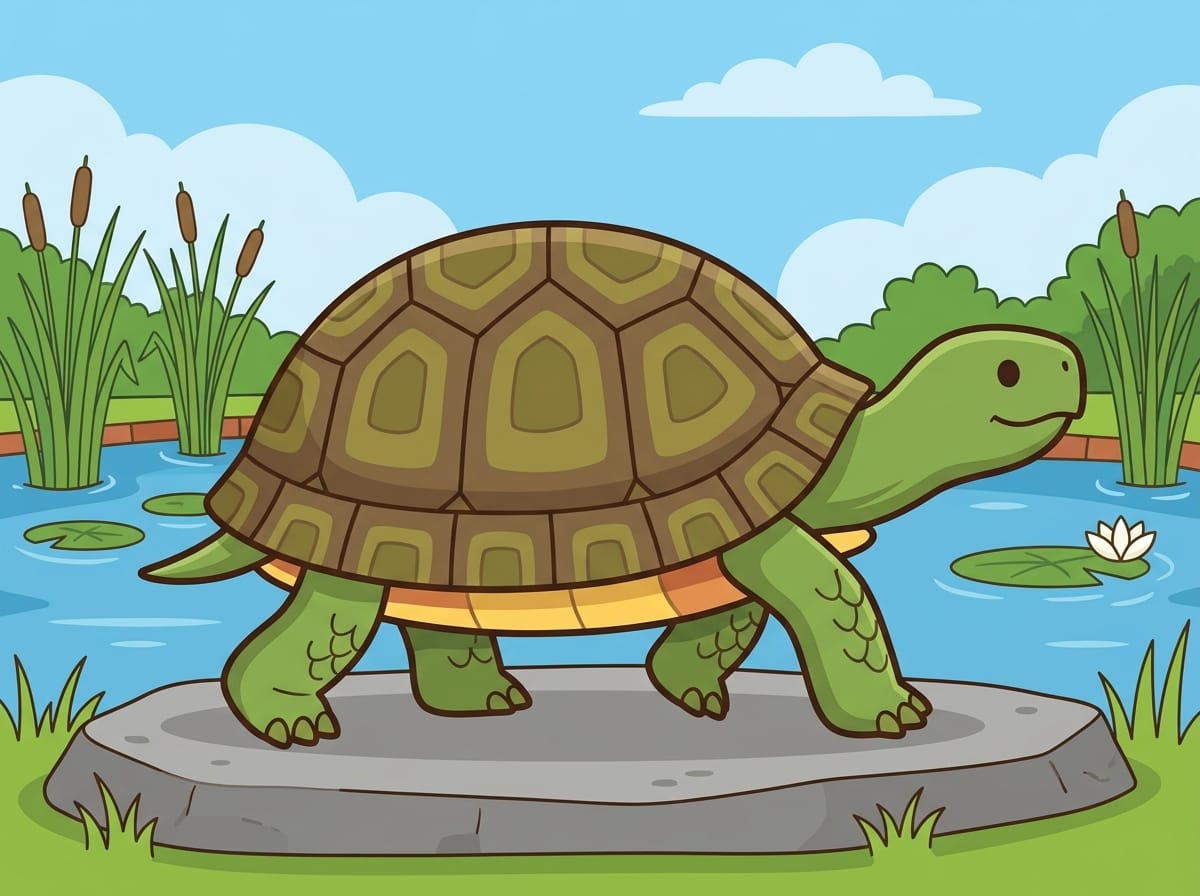
A green and brown turtle with a hard, patterned shell, four short legs and a small head, walking on a rock beside a pond.

Picture description

A turtle is walking on a rock next to a pond.

It has a hard shell with a pattern on it. The shell is brown and green.

It has four short legs and a small head.

Look at the picture. Write about the turtle. You can use the words in the box.

Write about the turtle. What does it look like? What can it do? Word box: shell, legs, head, green, slow, swim, walk

Scoring rubric

LevelWhat it looks like
7: Fully developed
  • Organized, cohesive response that fully carries out the task's purpose (narrate, inform, explain or argue) with the features that purpose needs
  • Varied, complex sentences used with control
  • Precise, wide-ranging vocabulary, including the content area's technical words
6: Well developed
  • Clearly organized response that carries out the purpose, with linking words that join ideas across the text
  • A range of sentence types, with occasional errors that don't affect meaning
  • Specific and some technical vocabulary used appropriately
5: Developed
  • Connected ideas that carry out the purpose, with some organization beyond a list
  • Compound and some complex sentences; errors sometimes affect meaning
  • Some content-area vocabulary alongside everyday words
4: Expanding
  • Several related sentences on the task, with simple connections between ideas
  • Simple and compound sentences; repeated patterns and errors
  • Mostly general vocabulary, some specific words
3: Emerging
  • A few sentences or phrases about the task; little connection between them
  • Short simple sentences or formulas, often with errors
  • Everyday words, repeated; relies on words given in the task
2: Beginning
  • Words, phrases or one simple sentence related to the task
  • Memorized chunks or patterns
  • A few familiar words, some copied from the prompt
1: Starting
  • Single words, labels or drawings related to the task
  • No sentence structure yet
  • Words may be copied, or partly in another language

A strong sample response

The turtle has a hard shell. The shell is green and brown. It has four legs and a small head. The turtle can walk on the rock. It can swim in the water. It is slow.

This sits at about level 4: several related sentences that describe the turtle and then say what it can do, with simple sentences in a repeated pattern ("It has", "It can"). It uses the word box well and adds its own detail ("on the rock"). Linking words would move it higher.

What to look for

  • Grade 1 students write by hand in a paper booklet on the real test, so print this task or have the child write on paper rather than type.
  • This task is informational writing in science: describing an animal’s body parts and what it can do. Check that the child writes about both questions, how it looks and what it can do.
  • Using the word box is expected at Tier A. Copying the words as a list is level 1 or 2; putting them in sentences is the goal.
  • If the answer is blank, copied from the task, off the topic or not in English, note that instead of matching it to a level.

Prompt 2: Tier A tasks

Suggested time: about 10 minutes

Write about a helper. You can use the sentence starters and the words in the box.

Write about a person who helps at your school or in your town. Who is the helper? What does the helper do? Sentence starters: My helper is ___. My helper ___. Word box: bus driver, nurse, cook, teacher, firefighter, helps, drives, works

Scoring rubric

LevelWhat it looks like
7: Fully developed
  • Organized, cohesive response that fully carries out the task's purpose (narrate, inform, explain or argue) with the features that purpose needs
  • Varied, complex sentences used with control
  • Precise, wide-ranging vocabulary, including the content area's technical words
6: Well developed
  • Clearly organized response that carries out the purpose, with linking words that join ideas across the text
  • A range of sentence types, with occasional errors that don't affect meaning
  • Specific and some technical vocabulary used appropriately
5: Developed
  • Connected ideas that carry out the purpose, with some organization beyond a list
  • Compound and some complex sentences; errors sometimes affect meaning
  • Some content-area vocabulary alongside everyday words
4: Expanding
  • Several related sentences on the task, with simple connections between ideas
  • Simple and compound sentences; repeated patterns and errors
  • Mostly general vocabulary, some specific words
3: Emerging
  • A few sentences or phrases about the task; little connection between them
  • Short simple sentences or formulas, often with errors
  • Everyday words, repeated; relies on words given in the task
2: Beginning
  • Words, phrases or one simple sentence related to the task
  • Memorized chunks or patterns
  • A few familiar words, some copied from the prompt
1: Starting
  • Single words, labels or drawings related to the task
  • No sentence structure yet
  • Words may be copied, or partly in another language

A strong sample response

My helper is the bus driver. Her name is Ms. Joy. She drive the bus to school every day. She say good morning to me. She help us be safe on the bus.

This sits at about level 3 to 4: a few connected sentences on the task, built from the sentence starter, with a real detail (her name, saying good morning). The missing -s on "drive", "say" and "help" is a typical error at this level and doesn’t get in the way of meaning.

What to look for

  • Grade 1 students write by hand in a paper booklet on the real test, so print this task or have the child write on paper rather than type.
  • Community helpers are a grade 1 social studies topic. Talk about helpers the child knows before they write, so they have something to say.
  • Sentence starters are support, not a limit. A child who writes "My helper is the nurse" and stops has answered only the first question; ask "What does she do?"
  • If the answer is blank, copied from the task, off the topic or not in English, note that instead of matching it to a level.

Prompt 3: Tier B/C tasks

Suggested time: about 15 minutes

Look at the picture. Then write.

Science and Social Studies: Recycling at School
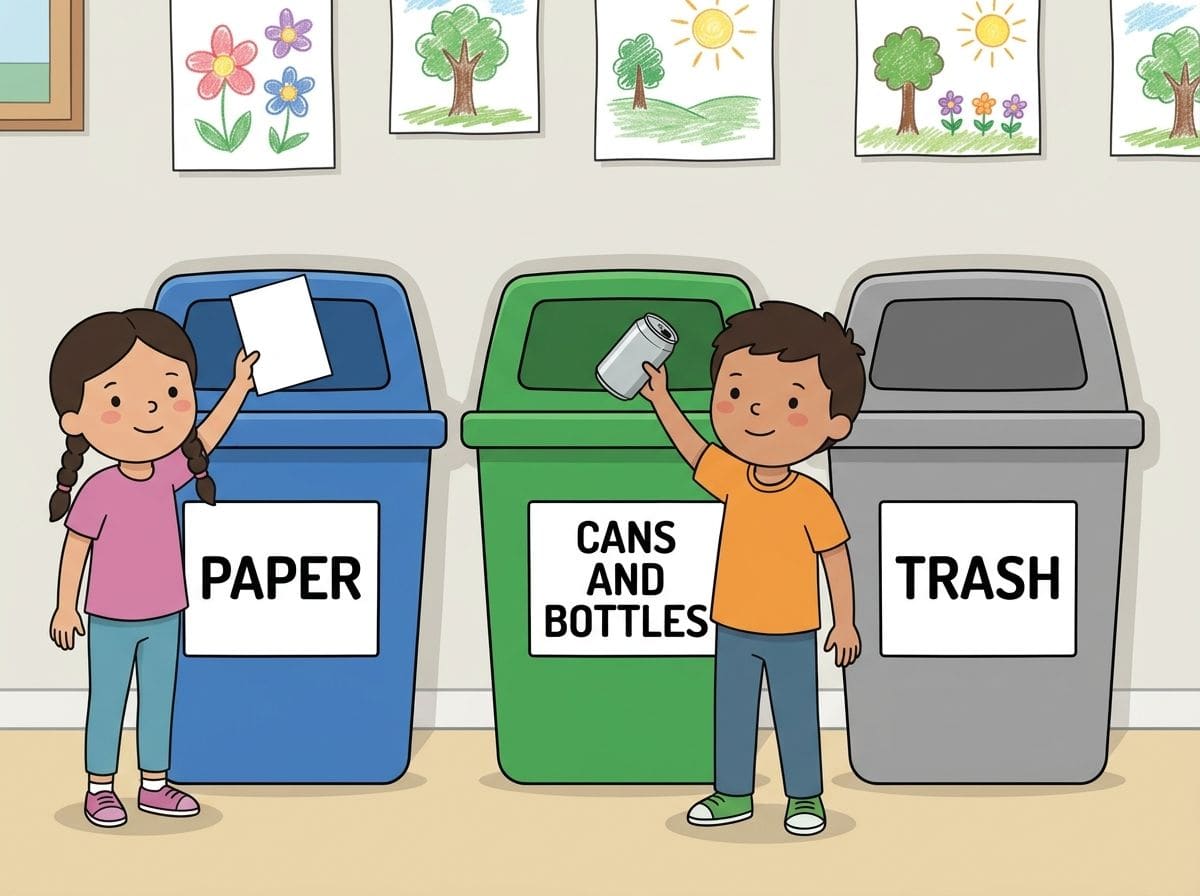
Three bins in a school hallway: a blue bin labeled PAPER, a green bin labeled CANS AND BOTTLES, and a gray bin labeled TRASH. A girl drops paper into the blue bin and a boy drops a can into the green bin.

Picture description

Three bins stand in a school hallway.

The blue bin says PAPER. The green bin says CANS AND BOTTLES. The gray bin says TRASH.

A girl is putting paper into the blue bin. A boy is putting a can into the green bin.

Look at the picture. Then write a letter to the other first graders at your school.

Your class wants everyone at school to recycle. Write a letter to the other first graders. Tell them: - what recycling is - how to sort things into the bins - why recycling is good for the Earth

Scoring rubric

LevelWhat it looks like
7: Fully developed
  • Organized, cohesive response that fully carries out the task's purpose (narrate, inform, explain or argue) with the features that purpose needs
  • Varied, complex sentences used with control
  • Precise, wide-ranging vocabulary, including the content area's technical words
6: Well developed
  • Clearly organized response that carries out the purpose, with linking words that join ideas across the text
  • A range of sentence types, with occasional errors that don't affect meaning
  • Specific and some technical vocabulary used appropriately
5: Developed
  • Connected ideas that carry out the purpose, with some organization beyond a list
  • Compound and some complex sentences; errors sometimes affect meaning
  • Some content-area vocabulary alongside everyday words
4: Expanding
  • Several related sentences on the task, with simple connections between ideas
  • Simple and compound sentences; repeated patterns and errors
  • Mostly general vocabulary, some specific words
3: Emerging
  • A few sentences or phrases about the task; little connection between them
  • Short simple sentences or formulas, often with errors
  • Everyday words, repeated; relies on words given in the task
2: Beginning
  • Words, phrases or one simple sentence related to the task
  • Memorized chunks or patterns
  • A few familiar words, some copied from the prompt
1: Starting
  • Single words, labels or drawings related to the task
  • No sentence structure yet
  • Words may be copied, or partly in another language

A strong sample response

Dear First Graders,

Please recycle at our school! Recycling means we use old things again to make new things. First, look at what you are throwing away. If it is paper, put it in the blue bin. If it is a can or a bottle, put it in the green bin. Food and dirty napkins go in the trash. Recycling is good for the Earth because we don’t have to cut down so many trees, and less garbage goes to the dump. When you recycle, you help keep the animals and our planet clean. So please sort your things every day!

From, Room 4

This sits at about level 6 to 7 for grade 1. It is organized as a letter and covers all three points in order. It uses linking words (first, if, because, so), complex sentences with "if" and "when", and topic words (recycle, sort, garbage, dump, planet). It explains and persuades at the same time, which is what this integrated science and social studies task asks for.

What to look for

  • Grade 1 students write by hand in a paper booklet on the real test, so print this task or have the child write on paper rather than type.
  • This Tier B/C task joins science (caring for the Earth) with social studies (being part of a school community). A strong answer explains how and why, not just "recycle is good."
  • Check the three bullet points one at a time. Reading the bin labels in the picture is allowed and helps with the "how to sort" part.
  • If the answer is blank, copied from the task, off the topic or not in English, note that instead of matching it to a level.

Unofficial practice. This site is not affiliated with, endorsed by, or connected to WIDA, the Wisconsin Center for Education Research, or the Board of Regents of the University of Wisconsin System. WIDA and WIDA ACCESS are trademarks of the Board of Regents of the University of Wisconsin System. Every question here is original practice material written to match the published test design.

WIDA Practice

Unofficial practice. Not affiliated with WIDA. Free, independent practice tests and guides written to match the published test design.

No sign-up or ads. Your practice is saved only in this browser. Privacy policy · Refund policy

Practice for other English learner tests

  • TELPAS practice test (Texas)
  • Free TELPAS practice tests for grades 2–12
  • ELPAC practice test (California)

Practice

  • All practice tests
  • Choose a grade band
  • Listening, speaking, reading, and writing
  • Practice tools
  • Printable practice packs

By grade

  • WIDA practice test for kindergarten
  • WIDA practice test for 1st grade
  • WIDA practice test for 2nd and 3rd grade
  • WIDA practice test for 4th and 5th grade
  • WIDA practice test for 6th, 7th and 8th grade
  • WIDA practice test for high school (grades 9–12)
  • WIDA practice test for kindergarten screener
  • WIDA practice test for 1st grade screener
  • WIDA practice test for 2nd and 3rd grade screener
  • WIDA practice test for 4th and 5th grade screener
  • WIDA practice test for middle school screener
  • WIDA practice test for high school screener

Learn

  • Preparation guides
  • What Is the WIDA Test? A Parent's Guide to WIDA ACCESS
  • WIDA Scale Scores: How They Relate to Proficiency Levels
  • ELPAC vs WIDA ACCESS: How California's Test Compares
  • How Long Is the WIDA Test? Timing by Domain and Grade
  • How to Prepare for WIDA ACCESS: A Practical Plan for Parents
  • New York WIDA ACCESS: The Switch from NYSESLAT in 2026–27
  • Official WIDA Sample Items, Test Demo and Practice: Where to Find Them
  • TELPAS vs WIDA ACCESS: How Texas's Test Compares
  • WIDA ACCESS 2025–26 Changes: What Parents Need to Know
  • WIDA ACCESS in Middle and High School: What It Means for Grades 6–12
  • How WIDA ACCESS Is Administered: A Guide for School Staff
  • WIDA Exit Criteria by State: ACCESS Scores to Exit EL Services
  • WIDA Kindergarten Test: What to Expect and How to Prepare
  • WIDA Listening and Reading Test: Folders, Levels and Adaptivity
  • WIDA Proficiency Levels 1–6 Explained, With Examples by Grade
  • WIDA Score Release Dates: When 2027 ACCESS Scores Come Out
  • WIDA Scores Explained: How to Read the WIDA Score Report
  • WIDA Screener: What It Is, How Long It Takes and How It Is Scored
  • WIDA Speaking Test: Tiers, the Model Student and How to Practice
  • Which States Use WIDA? Every State for 2026–27
  • WIDA Testing Window 2026–27: ACCESS Test Dates by State
  • WIDA Writing Test: Tasks, Tiers, Scoring and Sample Answers
  • About this site
AboutContactPrivacyTerms of use

Unofficial practice. This site is not affiliated with, endorsed by, or connected to WIDA, the Wisconsin Center for Education Research, or the Board of Regents of the University of Wisconsin System. WIDA and WIDA ACCESS are trademarks of the Board of Regents of the University of Wisconsin System. Every question here is original practice material written to match the published test design.