WIDA listening practice for 1st grade
Printable version. Original practice written to match the published WIDA format, not questions from the official test. The answer key, with an explanation for every answer, is at the end.
Questions
Level A folders
Look at the picture. Press Play and listen to Ms. Rogers. Then answer the questions.
Social and Instructional: Art Time
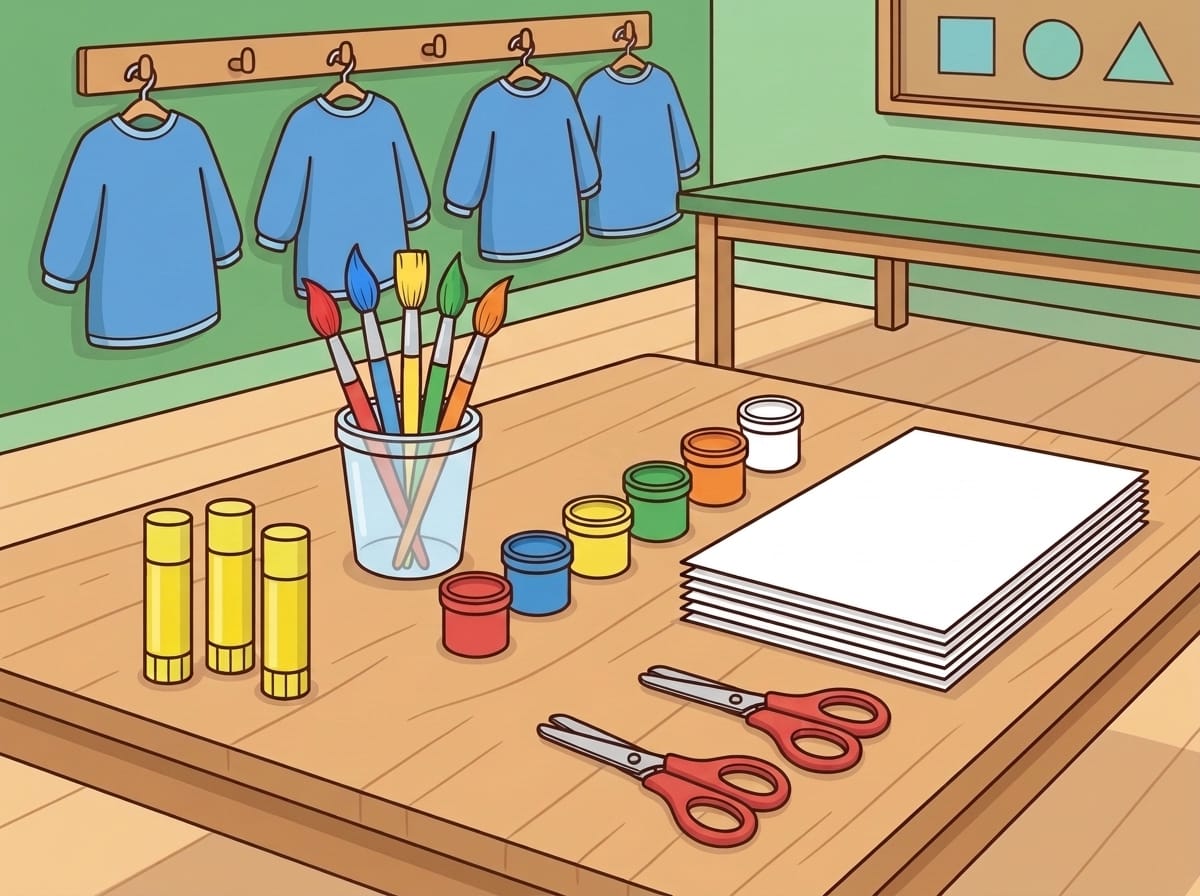
Picture: A classroom art table with a cup of paintbrushes, paint pots, blank paper, scissors and glue sticks. Smocks hang on hooks by the table.
Transcript for the adult to read aloud. The student listens and does not read it.
Ms. Rogers: Good morning, class. It is art time.
Ms. Rogers: First, get a paintbrush from the cup.
Ms. Rogers: Next, put on your smock. A smock keeps your shirt clean.
Ms. Rogers: Then sit at the green table. Today we will paint fish.
Choose the picture.
1. What does Ms. Rogers tell the class to get first?
 A Scissors
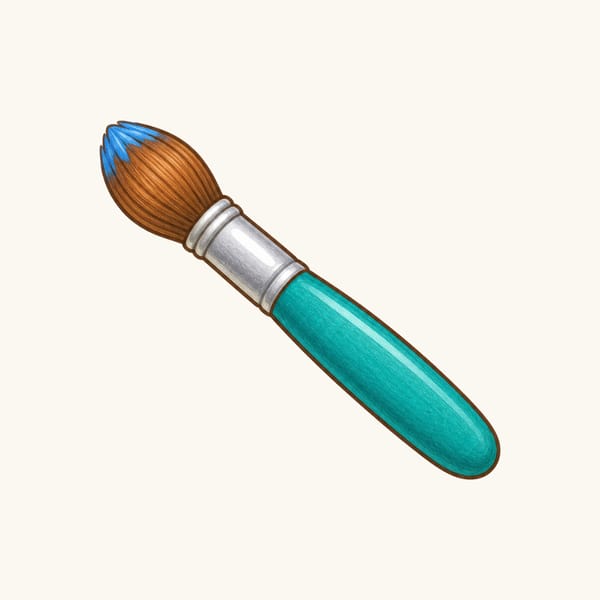 B A paintbrush
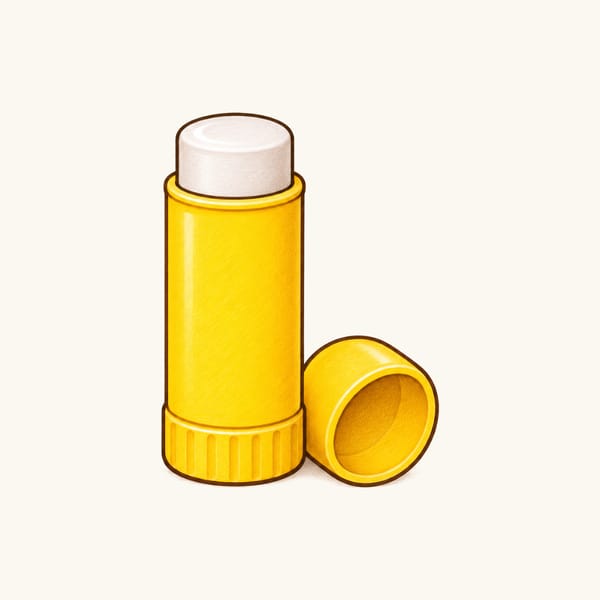 C A glue stick
Choose the best answer.
2. Why do the children put on a smock?
- A To keep shirts clean
- B To stay warm at the table
- C To get ready for lunch
Choose the best answer.
3. What will the class paint today?
- A Birds
- B Trees
- C Fish
Press Play. Listen to Brianna and Leo at recess. Then answer the questions.
Social and Instructional: A New Friend
Transcript for the adult to read aloud. The student listens and does not read it.
Brianna: Hi! My name is Brianna. What is your name?
Leo: I am Leo. I am new at this school.
Brianna: Do you want to play ball with me?
Leo: Yes! But first I need my jacket. It is cold.
Brianna: Okay. I will wait by the slide.
Choose the best answer.
4. Who is new at the school?
- A Leo
- B Brianna
- C Ms. Rogers
Choose the best answer.
5. What does Leo need first?
- A His ball
- B His lunch
- C His jacket
Choose the best answer.
6. Where will Brianna wait?
- A By the door
- B By the slide
- C By the swings
Press Play and listen to the story. Then answer the questions.
Language Arts: Kit and the Big Hat
Transcript for the adult to read aloud. The student listens and does not read it.
This is Kit. Kit is a little cat.
Kit finds a big red hat.
Kit jumps into the hat. Oh no! The hat falls over.
Now Kit is under the hat. She cannot see.
Kit’s friend Danny lifts the hat. Kit can see again. Kit is happy.
Choose the best answer.
7. What does Kit find?
- A A small red ball
- B A big red hat
- C A big blue box
Choose the best answer.
8. What happens when Kit jumps into the hat?
- A It flies away
- B It gets small
- C It falls over
Choose the best answer.
9. How does Kit feel at the end?
- A Happy
- B Sad
- C Sleepy
Level B folders
Press Play and listen to Mr. Ellis. Then answer the questions.
Math: A House Made of Shapes
Transcript for the adult to read aloud. The student listens and does not read it.
Mr. Ellis: Today we will draw a house with shapes. Watch me.
Mr. Ellis: First, I draw a big square. That is the house.
Mr. Ellis: Then I draw a triangle on top of the square. That is the roof.
Mr. Ellis: Now I draw a small rectangle at the bottom of the square. That is the door.
Mr. Ellis: Let’s count. A square, a triangle and a rectangle. I used three shapes.
Choose the picture.
10. Which shape is the roof?
 A A circle
 B A square
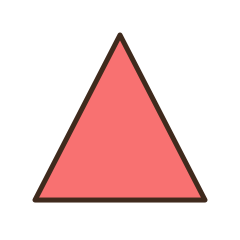 C A triangle
 D A rectangle
Choose the best answer.
11. Where does Mr. Ellis draw the door?
- A On the roof
- B Next to the house
- C Inside the triangle
- D At the bottom
Choose the best answer.
12. How many shapes does Mr. Ellis use?
- A Three
- B Two
- C Four
- D Five
Look at the picture. Press Play and listen to Ms. Rogers. Then answer the questions.
Science: How a Frog Grows
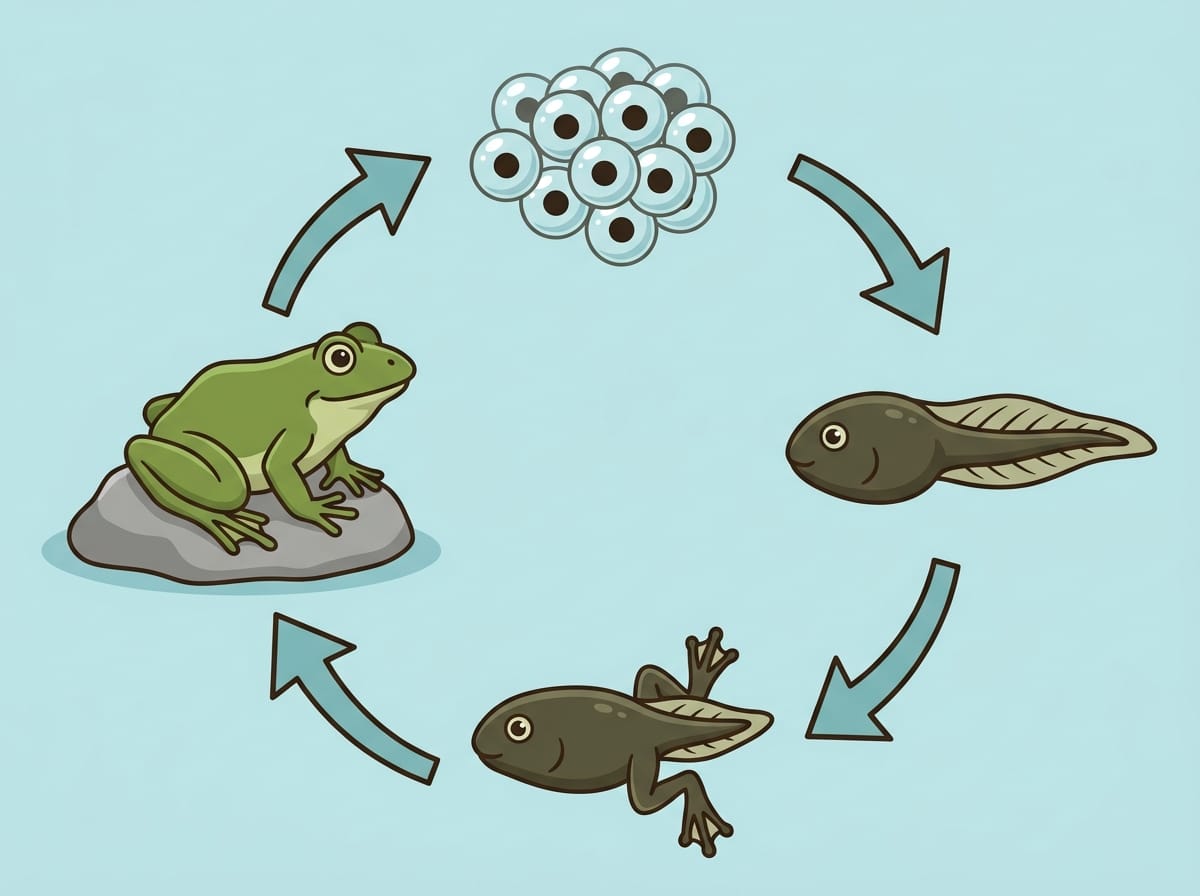
Picture: Four pictures in a circle joined by arrows: frog eggs floating in a pond, a tadpole with a long tail, a tadpole with back legs and a shorter tail, and a grown frog with no tail on a rock.
Transcript for the adult to read aloud. The student listens and does not read it.
Ms. Rogers: A frog starts as a tiny egg. The eggs float in the pond.
Ms. Rogers: A tadpole comes out of the egg. A tadpole has a long tail. It swims like a fish.
Ms. Rogers: Next, the tadpole grows legs. First it grows back legs. Then it grows front legs.
Ms. Rogers: At last, the tail is gone. Now it is a frog. The frog can hop out of the water.
Choose the best answer.
13. What comes out of the egg?
- A A frog
- B A tadpole
- C A little fish
- D A turtle
Choose the best answer.
14. Which legs does the tadpole grow first?
- A The front legs
- B The tail
- C All four legs at once
- D The back legs
Choose the best answer.
15. How do you know the tadpole is now a frog?
- A It has a long tail
- B It lives in an egg
- C It has no tail
- D It swims like a fish
Look at the picture. Press Play and listen to Olivia talk with Mr. Garcia. Then answer the questions.
Social Studies: Our Mail Carrier
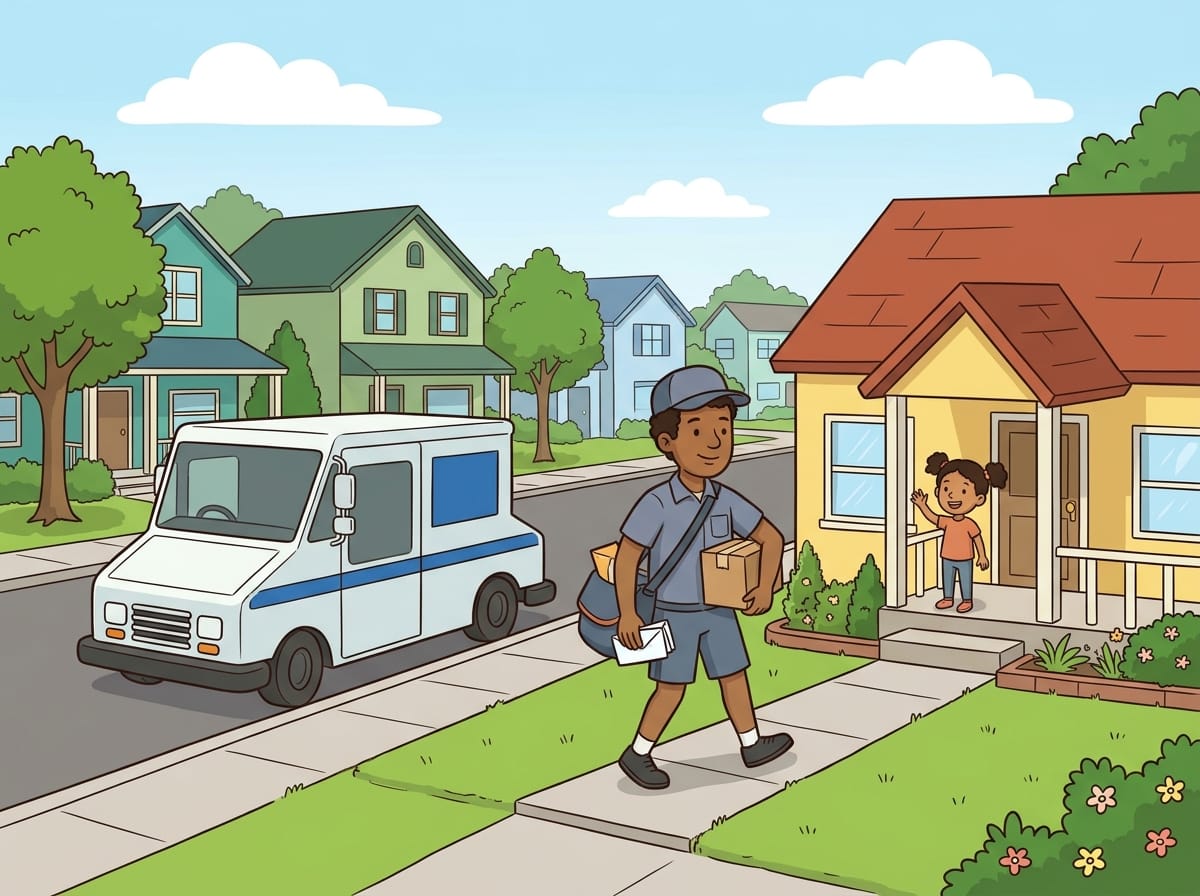
Picture: A mail carrier in a blue uniform and cap carries a mail bag and a small box up the walk to a house. A white mail truck is parked on the street. A girl waves from the porch.
Transcript for the adult to read aloud. The student listens and does not read it.
Olivia: Hello! Are you our mail carrier?
Mr. Garcia: Yes, I am. I bring letters and boxes to every house on this street.
Olivia: Do you walk all day?
Mr. Garcia: In the morning, I drive my truck to the street. Then I walk from house to house.
Olivia: What do you do when it rains?
Mr. Garcia: I put on my rain coat, and I keep working. The mail has to get there.
Choose the best answer.
16. What does Mr. Garcia bring to each house?
- A Letters and boxes
- B Food and water
- C Books and toys
- D Plants and flowers
Choose the best answer.
17. How does Mr. Garcia get to the street in the morning?
- A He rides a bike
- B He takes the bus
- C He drives his truck
- D He walks from his house
Choose the best answer.
18. What does Mr. Garcia do when it rains?
- A He goes home
- B He keeps working
- C He waits in his truck
- D He stops for the day
Level C folders
Press Play and listen to the story. Then answer the questions.
Language Arts: Rosa’s Rainy Saturday
Transcript for the adult to read aloud. The student listens and does not read it.
Rosa wanted to fly her new kite at the park on Saturday.
On Saturday morning, she looked out the window. Dark clouds filled the sky, and rain tapped on the glass.
Rosa frowned. She put her kite back in the closet.
Then her grandpa had an idea. “Let’s make a paper boat,” he said. “When the rain stops, we can sail it in the puddles.”
Rosa and Grandpa folded a paper boat together. By lunch, the sun came out. Rosa smiled and ran outside with her boat.
Choose the best answer.
19. Why did Rosa put her kite away?
- A It was broken
- B Grandpa said no
- C The park was closed
- D It was raining
Choose the best answer.
20. The story says Rosa frowned. What does that tell you?
- A She felt excited
- B She felt sad
- C She felt hungry
- D She felt sleepy
Choose the best answer.
21. What did Rosa do at the end of the story?
- A She took her boat outside
- B She flew her kite at the park
- C She stayed in her room
- D She made a paper hat
Press Play and listen to Mr. Ellis and Mateo talk about a test the class did. Then answer the questions.
Science: Ice in the Sun
Transcript for the adult to read aloud. The student listens and does not read it.
Mr. Ellis: We put one ice cube on each of two plates. One plate is in the sunny window. One plate is in the shady corner.
Mr. Ellis: Mateo, what do you see after twenty minutes?
Mateo: The ice in the window is almost gone. There is mostly water on the plate.
Mateo: The ice in the corner is still there. It is smaller, but it is still ice.
Mr. Ellis: Why do you think the ice in the window melted faster?
Mateo: Because the sun is warm. Heat makes ice melt.
Mr. Ellis: Yes. When ice gets warm, it melts into water.
Choose the best answer.
22. Where did the ice melt faster?
- A In the shady corner
- B In the freezer
- C In the sunny window
- D On the floor
Choose the best answer.
23. What was on the window plate after twenty minutes?
- A Mostly water
- B A big ice cube
- C Some snow
- D Nothing at all
Choose the best answer.
24. An ice cube is left outside on a hot day. What will most likely happen?
- A It will get bigger
- B It will turn to snow
- C It will stay the same
- D It will melt
Answer key
Level A folders
1. What does Ms. Rogers tell the class to get first?
From “Social and Instructional: Art Time”
- Scissors
- Correct answerA paintbrush
- A glue stick
Why “A paintbrush” is correct
Classroom directions at grade 1 come in a row of steps, and the question asks about the first one. The child has to catch the word "first" and the object named right after it. All three things are on the art table in the picture, so the picture alone cannot give the answer; only the audio can.
Why the other answers are wrong
- Scissors — Scissors are on the table in the picture, but Ms. Rogers never asks for them.
- A glue stick — A glue stick is on the table too, but it is not part of her directions.
2. Why do the children put on a smock?
From “Social and Instructional: Art Time”
- To keep shirts cleanCorrect answer
- To stay warm at the table
- To get ready for lunch
Why “To keep shirts clean” is correct
Ms. Rogers gives the reason in the same breath as the direction: "A smock keeps your shirt clean." A child who does not know the word "smock" can still answer by listening for what it does. That is a useful habit to point out: an unknown word is often explained right after it.
Why the other answers are wrong
- To stay warm at the table — A smock can look like a jacket, but nothing is said about being warm.
- To get ready for lunch — Lunch is not mentioned. The class is getting ready to paint.
3. What will the class paint today?
From “Social and Instructional: Art Time”
- Birds
- Trees
- FishCorrect answer
Why “Fish” is correct
The answer is in the last line, after the steps are done: "Today we will paint fish." The paper in the picture is still blank, so the child must remember the end of the talk. If they miss it, replay only the last line.
Why the other answers are wrong
- Birds — Birds are not mentioned. The picture shows blank paper, so nothing gives birds away.
- Trees — Trees are not mentioned. Only the last line says what the class will paint.
4. Who is new at the school?
From “Social and Instructional: A New Friend”
- LeoCorrect answer
- Brianna
- Ms. Rogers
Why “Leo” is correct
Both children say their names, so the child has to link "new at this school" to the right speaker. Leo says it about himself. This is the kind of social language students meet on the first day in a new class.
Why the other answers are wrong
- Brianna — Brianna is the one who says hello and asks the question. She does not say she is new.
- Ms. Rogers — Ms. Rogers is a teacher in another folder. She is not in this talk.
5. What does Leo need first?
From “Social and Instructional: A New Friend”
- His ball
- His lunch
- His jacketCorrect answer
Why “His jacket” is correct
Leo says "first I need my jacket" because it is cold. The ball comes up just before, so a child who stops listening early may choose it. Ask the child what Leo needs before he can play.
Why the other answers are wrong
- His ball — The ball is what Brianna wants to play with. Leo needs his jacket before that.
- His lunch — Lunch is not part of the talk. They are at recess.
6. Where will Brianna wait?
From “Social and Instructional: A New Friend”
- By the door
- By the slideCorrect answer
- By the swings
Why “By the slide” is correct
The last line tells the plan: "I will wait by the slide." All three choices are places on a playground, so the child needs the exact word. Short talks like this usually end with the plan.
Why the other answers are wrong
- By the door — A door is not mentioned. Leo goes to get his jacket, but Brianna stays at the slide.
- By the swings — Swings are a playground place too, but Brianna names the slide.
7. What does Kit find?
From “Language Arts: Kit and the Big Hat”
- A small red ball
- A big red hatCorrect answer
- A big blue box
Why “A big red hat” is correct
Each wrong choice shares a word with the right one ("red", "big"), so the child has to hold the whole phrase "a big red hat". That is a real listening skill at this level: two describing words and a noun together.
Why the other answers are wrong
- A small red ball — It is red, like the hat, but Kit finds a hat, not a ball, and it is big, not small.
- A big blue box — It is big, like the hat, but the story never mentions a box or the color blue.
8. What happens when Kit jumps into the hat?
From “Language Arts: Kit and the Big Hat”
- It flies away
- It gets small
- It falls overCorrect answer
Why “It falls over” is correct
The story says "Oh no! The hat falls over." The words "Oh no!" signal that something went wrong, and the next sentence says what. Point out that "Oh no" is a clue that a problem is coming.
Why the other answers are wrong
- It flies away — The hat does not fly. It tips over with Kit under it.
- It gets small — The hat stays big. Kit is under it because it falls over.
9. How does Kit feel at the end?
From “Language Arts: Kit and the Big Hat”
- HappyCorrect answer
- Sad
- Sleepy
Why “Happy” is correct
The last sentence says "Kit is happy." A child might choose sad because Kit was stuck under the hat, so ask about the end of the story, after Danny helps.
Why the other answers are wrong
- Sad — Kit may feel sad while she is stuck, but at the end Danny helps and she is happy.
- Sleepy — Nothing in the story says Kit is tired.
Level B folders
10. Which shape is the roof?
From “Math: A House Made of Shapes”
- A circle
- A square
- Correct answerA triangle
- A rectangle
Why “A triangle” is correct
Mr. Ellis names three shapes and says what each one is for. The child must match "triangle" to "roof". It helps to know the shape names in English, which is real grade 1 math vocabulary.
Why the other answers are wrong
- A circle — A circle is not used in this house at all.
- A square — The square is the house itself, not the roof.
- A rectangle — The rectangle is the door.
11. Where does Mr. Ellis draw the door?
From “Math: A House Made of Shapes”
- On the roof
- Next to the house
- Inside the triangle
- At the bottomCorrect answer
Why “At the bottom” is correct
He says he draws the rectangle "at the bottom of the square." Position words like on top of, next to and at the bottom are part of math language at grade 1. If the child is unsure, draw the house together as you replay it.
Why the other answers are wrong
- On the roof — "On top of" is where the triangle goes, not the door.
- Next to the house — Nothing is drawn next to the house.
- Inside the triangle — The triangle is the roof. The door is on the square.
12. How many shapes does Mr. Ellis use?
From “Math: A House Made of Shapes”
- ThreeCorrect answer
- Two
- Four
- Five
Why “Three” is correct
Mr. Ellis counts the shapes at the end: a square, a triangle and a rectangle, three in all. A child can also count the shapes as they are named. Either way, the answer depends on hearing every step.
Why the other answers are wrong
- Two — Two is what you get if you miss one of the shapes, often the door.
- Four — Four would mean an extra shape. He names only three.
- Five — Five is too many. There is no window or chimney in this house.
13. What comes out of the egg?
From “Science: How a Frog Grows”
- A frog
- A tadpoleCorrect answer
- A little fish
- A turtle
Why “A tadpole” is correct
This is the order of a life cycle, which first graders learn in science. The egg does not hatch into a frog; it hatches into a tadpole. A child who knows frogs come from eggs but missed the middle step will choose "a frog".
Why the other answers are wrong
- A frog — A frog is the last stage. The egg hatches into a tadpole first.
- A little fish — Ms. Rogers says the tadpole swims like a fish, but it is not a fish.
- A turtle — Turtles also live in ponds, but they are not in this talk.
14. Which legs does the tadpole grow first?
From “Science: How a Frog Grows”
- The front legs
- The tail
- All four legs at once
- The back legsCorrect answer
Why “The back legs” is correct
"First it grows back legs. Then it grows front legs." The words first and then mark the order. This is a listen-for-detail question: the child has to keep which came first, not just that legs grow.
Why the other answers are wrong
- The front legs — The front legs come second, after the back legs.
- The tail — The tail is not a leg. It goes away at the end.
- All four legs at once — Ms. Rogers says the legs come one pair at a time, back legs first.
15. How do you know the tadpole is now a frog?
From “Science: How a Frog Grows”
- It has a long tail
- It lives in an egg
- It has no tailCorrect answer
- It swims like a fish
Why “It has no tail” is correct
The last step says "the tail is gone. Now it is a frog." The child has to connect the change (no tail) with the new name (frog). The wrong choices each describe an earlier stage, which is why the whole talk matters.
Why the other answers are wrong
- It has a long tail — A long tail is how a tadpole looks, not a frog.
- It lives in an egg — The egg is the very first stage.
- It swims like a fish — Swimming like a fish describes the tadpole.
16. What does Mr. Garcia bring to each house?
From “Social Studies: Our Mail Carrier”
- Letters and boxesCorrect answer
- Food and water
- Books and toys
- Plants and flowers
Why “Letters and boxes” is correct
Community helpers and their jobs are a grade 1 social studies topic. Mr. Garcia says what his job is in his first answer. The picture shows a box, which supports the answer, but "letters" comes only from the audio.
Why the other answers are wrong
- Food and water — Food and water are not mentioned. Those are things a different helper might bring.
- Books and toys — Books and toys could come in a box, but Mr. Garcia says letters and boxes.
- Plants and flowers — Plants and flowers are not part of the talk.
17. How does Mr. Garcia get to the street in the morning?
From “Social Studies: Our Mail Carrier”
- He rides a bike
- He takes the bus
- He drives his truckCorrect answer
- He walks from his house
Why “He drives his truck” is correct
Olivia asks if he walks all day, and he says no: first he drives his truck, then he walks. The child must keep the two steps apart and answer about the morning. "Walks" is in the talk, which is what makes the last choice tempting.
Why the other answers are wrong
- He rides a bike — A bike is not mentioned.
- He takes the bus — A bus is not mentioned.
- He walks from his house — He walks from house to house after he gets there, not from his own house.
18. What does Mr. Garcia do when it rains?
From “Social Studies: Our Mail Carrier”
- He goes home
- He keeps workingCorrect answer
- He waits in his truck
- He stops for the day
Why “He keeps working” is correct
He says he puts on a rain coat "and I keep working," and gives the reason: the mail has to get there. Three choices describe stopping, which is what a child might expect on a rainy day, so this checks that they listened rather than guessed.
Why the other answers are wrong
- He goes home — He does not go home. He says the mail has to get there.
- He waits in his truck — He does not wait. He puts on his rain coat and keeps going.
- He stops for the day — He keeps working in the rain, so he does not stop.
Level C folders
19. Why did Rosa put her kite away?
From “Language Arts: Rosa’s Rainy Saturday”
- It was broken
- Grandpa said no
- The park was closed
- It was rainingCorrect answer
Why “It was raining” is correct
The story never says "because". The child has to connect the dark clouds and rain on the window with what Rosa does next. Linking a cause to an action without a signal word is a level C skill.
Why the other answers are wrong
- It was broken — The kite is new, and nothing says it is broken.
- Grandpa said no — Grandpa does not say no. He comes up with a new idea.
- The park was closed — The park is not said to be closed. The weather is the problem.
20. The story says Rosa frowned. What does that tell you?
From “Language Arts: Rosa’s Rainy Saturday”
- She felt excited
- She felt sadCorrect answer
- She felt hungry
- She felt sleepy
Why “She felt sad” is correct
"Frowned" may be a new word. The child can work it out from what is happening: her plan is spoiled. The story also gives a contrast at the end, when the sun comes out and she smiles. Ask what face Rosa makes at the start and at the end.
Why the other answers are wrong
- She felt excited — A frown is an unhappy face, and Rosa's plan to fly her kite is spoiled, so she is not excited.
- She felt hungry — Nothing in this part of the story is about food.
- She felt sleepy — It is morning and her plan is spoiled. That makes her sad, not tired.
21. What did Rosa do at the end of the story?
From “Language Arts: Rosa’s Rainy Saturday”
- She took her boat outsideCorrect answer
- She flew her kite at the park
- She stayed in her room
- She made a paper hat
Why “She took her boat outside” is correct
The last line says she "ran outside with her boat." The kite choice is tempting because it was the plan at the start. A child has to notice that the plan changed, which is the point of the story.
Why the other answers are wrong
- She flew her kite at the park — Flying the kite was her first plan, but the kite stayed in the closet.
- She stayed in her room — She stays in while it rains, but at the end she runs outside.
- She made a paper hat — They fold a paper boat, not a hat.
22. Where did the ice melt faster?
From “Science: Ice in the Sun”
- In the shady corner
- In the freezer
- In the sunny windowCorrect answer
- On the floor
Why “In the sunny window” is correct
The class compares two places. Mateo describes both, so the child has to match "almost gone" to the window and "still there" to the corner. Comparing two results is how first graders start to talk about a science test.
Why the other answers are wrong
- In the shady corner — The ice in the corner is smaller but still there, so it melted more slowly.
- In the freezer — There is no freezer in this test. Both plates are in the classroom.
- On the floor — The plates are in a window and a corner, not on the floor.
23. What was on the window plate after twenty minutes?
From “Science: Ice in the Sun”
- Mostly waterCorrect answer
- A big ice cube
- Some snow
- Nothing at all
Why “Mostly water” is correct
Mateo says "There is mostly water on the plate." The ice did not disappear; it changed into water. "Nothing at all" is the trap for a child who heard "almost gone" and stopped there.
Why the other answers are wrong
- A big ice cube — A big ice cube is the opposite of what Mateo sees in the window.
- Some snow — Snow is not part of the test. Melting ice turns into water.
- Nothing at all — The ice is almost gone, but Mateo says there is water left.
24. An ice cube is left outside on a hot day. What will most likely happen?
From “Science: Ice in the Sun”
- It will get bigger
- It will turn to snow
- It will stay the same
- It will meltCorrect answer
Why “It will melt” is correct
This question goes beyond the talk. The child has to use the rule Mateo and Mr. Ellis say at the end (heat makes ice melt) on something new. That step from what happened to what will happen is what makes it a level C question.
Why the other answers are wrong
- It will get bigger — Ice does not grow in heat. The talk shows it gets smaller.
- It will turn to snow — Snow needs cold. A hot day makes ice turn to water.
- It will stay the same — The class saw ice change in the warm sun, so it will not stay the same.
Unofficial practice. This site is not affiliated with, endorsed by, or connected to WIDA, the Wisconsin Center for Education Research, or the Board of Regents of the University of Wisconsin System. WIDA and WIDA ACCESS are trademarks of the Board of Regents of the University of Wisconsin System. Every question here is original practice material written to match the published test design.